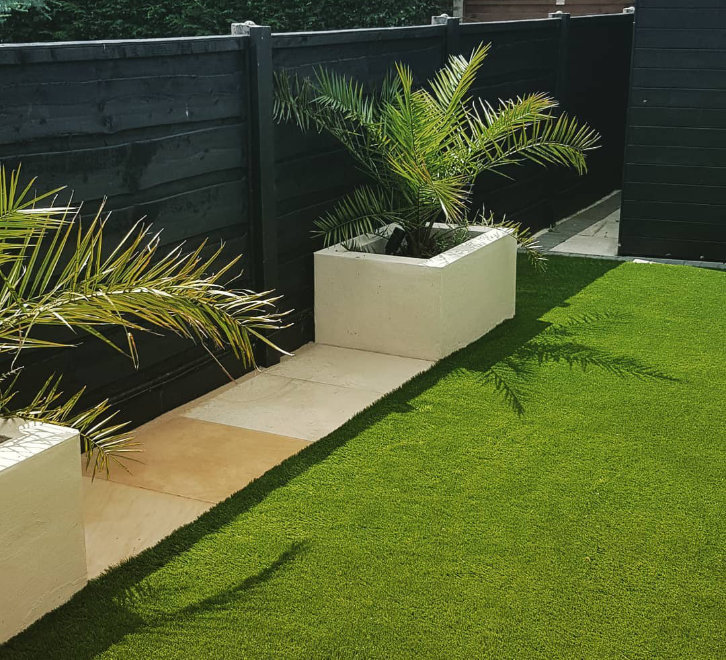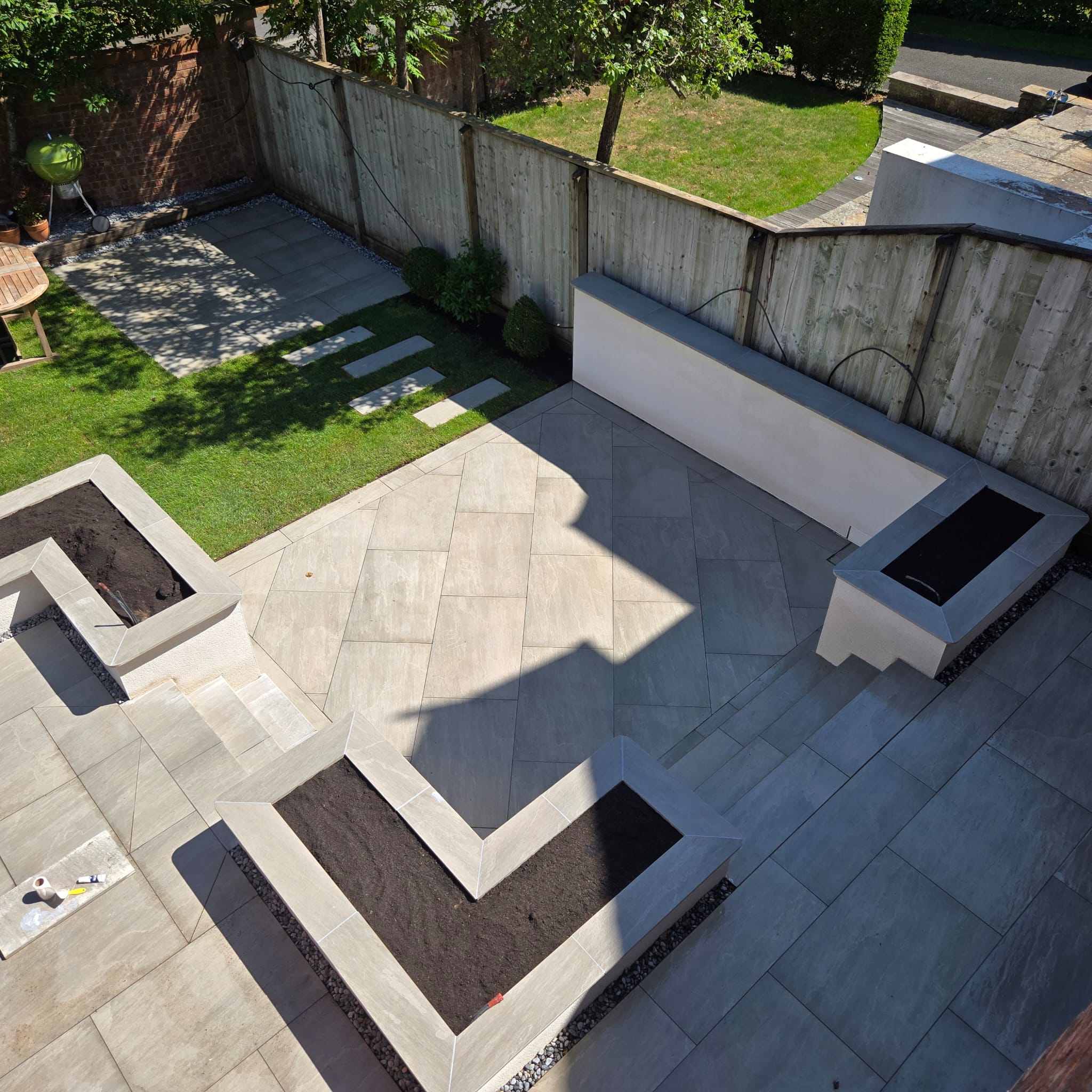
What Does a Full Garden Transformation Involve? A Step-by-Step Guide

Planning a full garden transformation in Manchester involves much more than choosing new paving or laying a fresh lawn. It’s about creating an outdoor space that works for your home, your lifestyle and the way you want to use it.

Whether you’re dreaming of a contemporary porcelain patio, a beautifully landscaped family garden or a complete redesign of a tired outdoor space, understanding the process can help you plan with confidence.

At The Manchester Landscaping Company, we specialise in transforming gardens across Manchester and the surrounding areas. From the initial consultation to the finishing touches, we combine practical landscaping expertise with careful planning and attention to detail.

Here’s what you can expect when undertaking a full garden transformation.

1. The Initial Consultation: Understanding Your Garden

Every successful garden transformation starts with understanding the space and what the homeowner wants to achieve.

During an initial site visit, we discuss your ideas, how you intend to use the garden and any existing problems you’d like to resolve.

We also assess practical considerations such as:

  • Garden levels, slopes and access
  • Existing patios, walls and structures
  • Drainage and areas prone to waterlogging
  • Privacy, sunlight and seating areas
  • Materials, maintenance preferences and budget

This stage helps us identify both the possibilities and the practical challenges before any work begins.

2. Planning Your New Garden and Bringing Ideas to Life

Once we understand your requirements, we can begin developing a practical plan for the transformation.

Depending on the project, this might involve creating new entertaining areas, introducing raised planters, installing pathways or completely changing the layout of the garden.

We provide detailed quotations outlining the proposed work and can use AI-generated visualisations to help customers picture how their finished garden could look.

These images are illustrative rather than exact representations of the finished result, but they can be particularly helpful when choosing between different layouts, paving materials and design features.

Being able to visualise your ideas before work begins can make planning much easier. Find out more in our guide, Visualise Your Dream Garden Before We Build.

We also provide clear information about the project, including payment arrangements and what to expect as the work progresses.

If you’re considering a complete redesign, our guide to garden landscaping costs in Manchester explains some of the factors that influence the overall price.
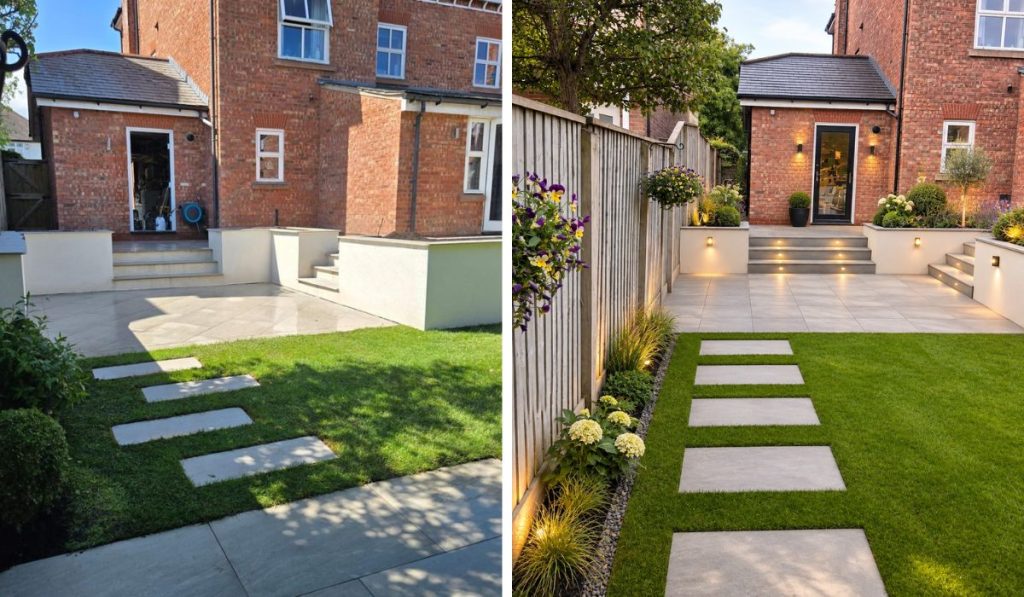
Side-by-side comparison of a completed garden transformation in Hale, Manchester, and an illustrative AI garden design featuring porcelain paving, rendered walls and lighting.
Left: Our completed Hale garden transformation. Right: An illustrative AI visualisation showing how we can help customers explore landscaping ideas before work begins.

3. Site Preparation: Building the Foundations for a Full Garden Transformation

One of the most important stages of any garden transformation is the work that happens before the new garden starts taking shape.

Depending on the existing site, preparation may include removing old paving, lifting turf, clearing unwanted vegetation, excavating ground and preparing suitable foundations.

Good groundwork is essential for the long-term performance of patios, pathways, retaining walls and other landscaped features.

It’s also the stage where potential issues with existing ground conditions can become clearer.

At The Manchester Landscaping Company, we understand that what lies beneath the finished surface is just as important as what you see above it.

4. Drainage, Garden Levels and Structural Landscaping

Not every garden is naturally level or well-drained, particularly in Manchester, where prolonged wet weather can expose existing drainage problems.

A complete transformation provides an opportunity to address these issues as part of the overall design.

Depending on the garden, this may involve installing drainage systems, adjusting ground levels, constructing retaining walls or creating steps between different areas.

Poor drainage is a common problem in Manchester gardens, particularly during periods of heavy rainfall. If your garden regularly becomes waterlogged, our guide to Why Is My Manchester Garden Waterlogged? explains the possible causes and solutions.

A Real Example: Full Garden Transformation in Manchester – Our Hale Project

One of our projects in Hale involved transforming a tired garden with uneven paving, deteriorating timber retaining structures and a lawn that suffered from poor drainage.

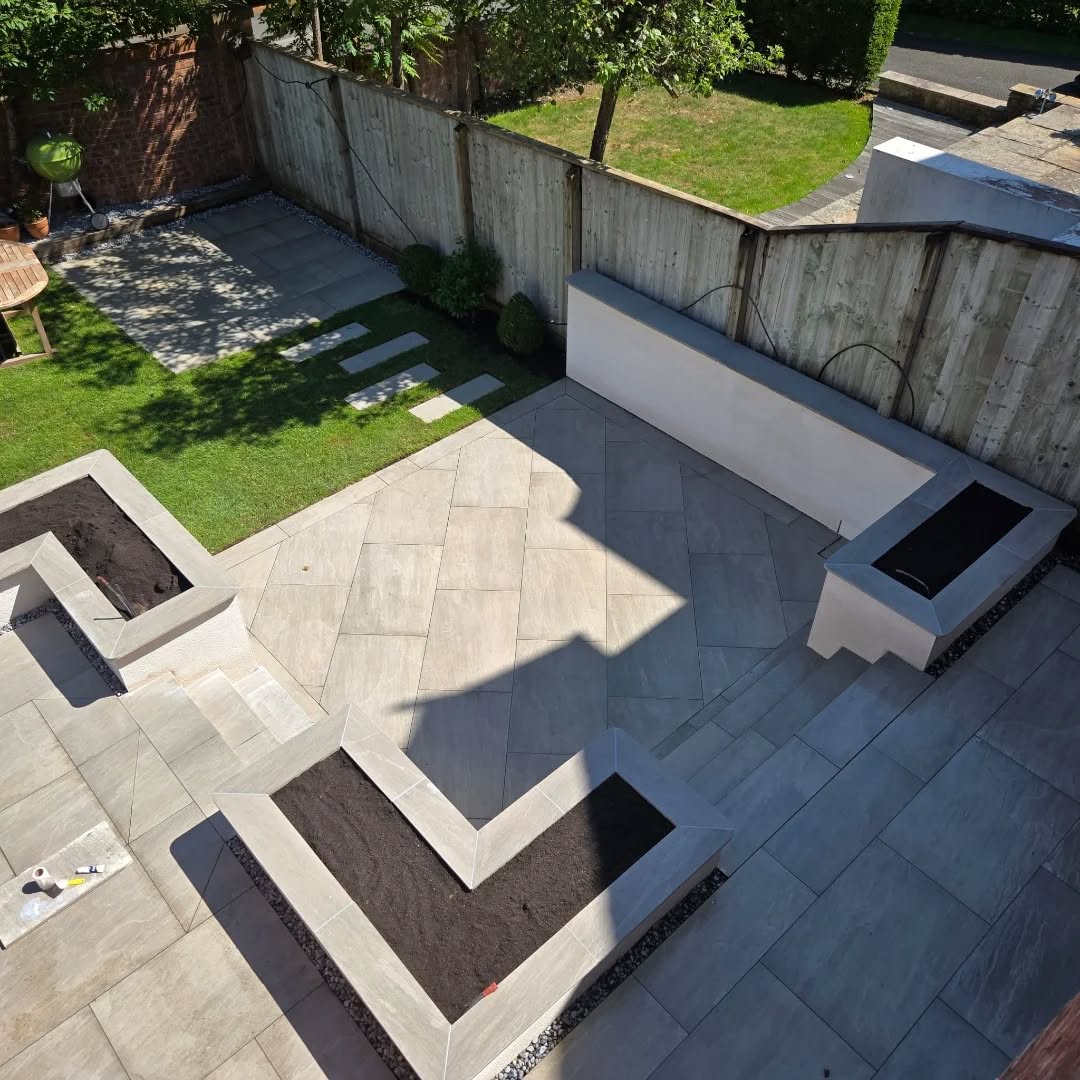
Working with the proposed garden design, we incorporated improved drainage, new retaining walls and planters, porcelain paving and carefully planned changes in level.

The finished garden included distinct seating areas, steps, a new lawn, lighting and planting spaces, creating a much more practical and attractive outdoor environment.

Our Hale project demonstrates why a full garden transformation in Manchester requires more than simply installing attractive materials. The underlying structure, drainage and garden levels all need to work together to create a beautiful, practical and long-lasting outdoor space.
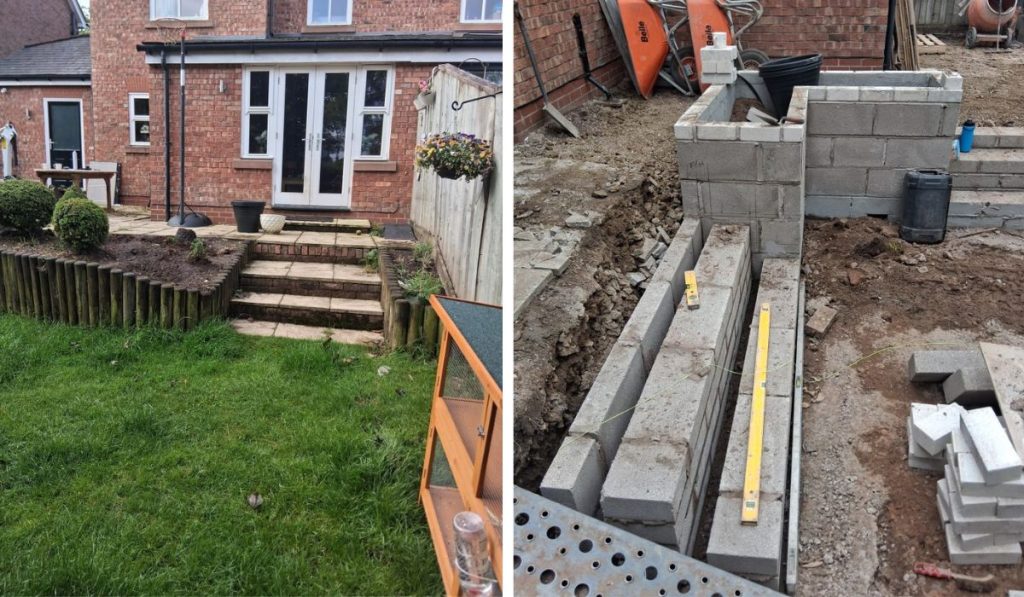
Before and during construction photographs of a Hale garden transformation, showing old timber retaining walls and steps alongside new concrete blockwork.
Our Hale garden transformation: the original garden alongside the structural groundwork and construction of new retaining walls and steps.

5. Installing Patios, Pathways and Garden Features

Once the groundwork and structural elements are in place, the more visible parts of the transformation can begin.

Depending on the design, this might include:

  • Porcelain or natural stone patios
  • Garden pathways and stepping stones
  • Raised beds and rendered planters
  • Steps and retaining walls
  • Fencing and privacy screening
  • Outdoor lighting and seating areas

Material choice plays an important role in both the appearance and maintenance requirements of the finished garden.

Porcelain paving, for example, is popular for contemporary gardens because of its clean appearance and relatively low maintenance requirements. Indian sandstone offers a more natural look, with individual variation in colour and texture.

We help customers consider which materials will work best for their garden, preferences and budget.


6. Lawns, Planting Areas and Finishing Touches

As the main construction work nears completion, attention turns to the elements that bring the whole garden together.

Fresh turf can provide a welcoming green space, while planting areas soften hard landscaping and introduce colour and texture.

Details such as edging, transitions between materials, lighting and the finishing of steps and walls all contribute to the overall appearance.

These final stages are where the different parts of the design begin to feel like one cohesive outdoor space.
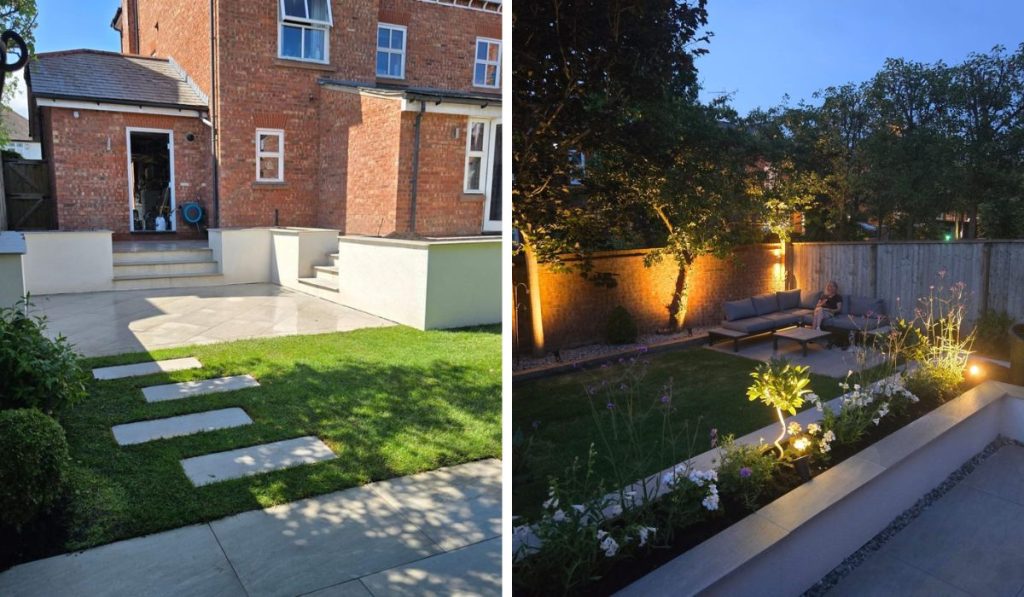
Completed garden transformation in Hale, Manchester, showing porcelain paving, lawn and stepping stones by day, alongside illuminated planting and seating areas at dusk.
Our completed Hale garden transformation, showcasing contemporary landscaping by day and atmospheric garden lighting after sunset.

7. Handover, Maintenance and Aftercare

A professionally landscaped garden should be something you can enjoy for years to come.

At The Manchester Landscaping Company, we believe that good customer service doesn’t end when the installation is finished.

We provide customers with practical maintenance guidance to help them care for their new paving, lawns and other garden features.

Our work is also supported by a six-year structural workmanship warranty, subject to the terms and coverage outlined in our warranty documentation.

By providing clear information throughout the project and guidance afterwards, we aim to make the entire experience as straightforward as possible.

A full garden transformation is a significant investment, so we believe it’s important that our customers feel confident about caring for their new outdoor space long after the work is complete.

How Long Does a Full Garden Transformation Take?

Every garden is different, so there isn’t a single timescale that applies to every project.

The size of the garden, complexity of the design, access, groundwork requirements, materials and weather conditions can all influence the schedule.

A relatively straightforward landscaping project may take considerably less time than a complete redesign involving drainage, retaining walls, multiple levels and extensive paving.

We discuss anticipated timescales with customers as part of the quotation and planning process, helping them understand what their particular project will involve.

Ready to Transform Your Garden?

A complete garden transformation is an investment in your home and the way you enjoy your outdoor space.

With the right planning, quality materials and experienced installation, even a tired or difficult garden can become somewhere you’ll love spending time.

At The Manchester Landscaping Company, we undertake garden transformations across Manchester, Stockport, Sale, Hale, Wilmslow and surrounding areas.

Whether you have a clear vision or need help exploring the possibilities, we’d be happy to discuss your project.

Contact The Manchester Landscaping Company to arrange a consultation and take the first step towards your new garden.
Winter Patio Installation in Manchester: Can You Fit a New Patio Now?

Can you fit a new patio in winter? Most people assume patio season ends when the clocks go back, so winter patio installation in Manchester rarely crosses their mind. People put the garden on hold and the quotes wait until March. Then everyone else has the same idea at the same time.

The truth is more useful than that. A winter build is often perfectly possible. However, it depends on two things far more than the month on the calendar: the temperature and the rain. Get those right and a patio laid in November or February can be every bit as solid as one laid in June.

Here’s how we decide whether a winter job goes ahead, what we do differently, and when we’d tell you to wait.

The short answer: yes, you can fit a new patio in winter in Manchester, as long as the air stays above 3°C while the mortar sets and the ground isn’t waterlogged. Cold, dry spells are workable. Hard frosts and days of heavy rain are not, so a good installer plans the build around the forecast rather than the date.

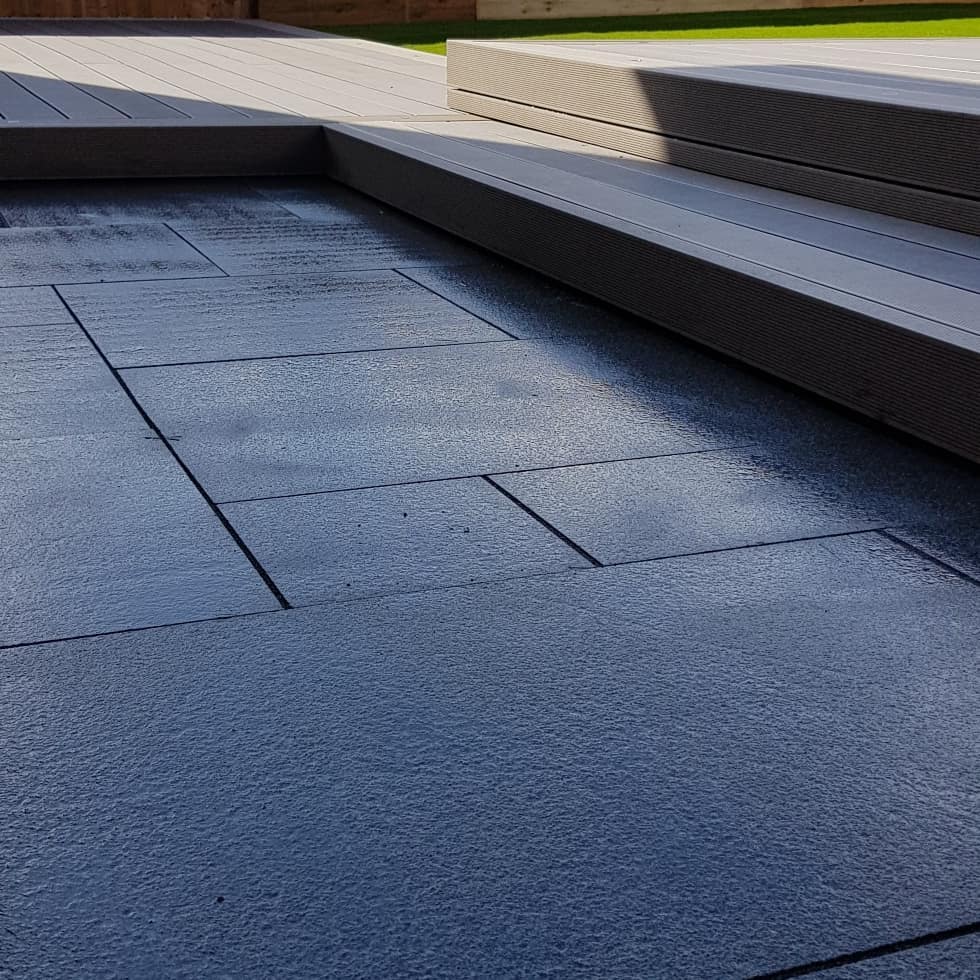
Dark porcelain paving, a good choice for winter patio installation in Manchester

Is winter patio installation in Manchester a good idea?

For most gardens, yes. Most of the work on a new patio happens below the slabs. We dig out, lay and compact a sub-base, then bed the paving on mortar. The digging and the sub-base don’t mind the cold. In fact, a dry, crisp week can be easier to work in than a muggy one in August.

The risky part is the mortar. That’s the stage where winter weather can do real damage, so it’s the stage we plan the whole job around. Get that right, and winter patio installation in Manchester is no more risky than a summer build.

There’s also a practical upside. Your plants are dormant, the lawn isn’t growing, and you’re not losing a summer of barbecues while the garden is a building site. Once the patio is down, it’s ready the moment the weather turns.

The 3°C rule: why temperature matters more than the month

Sand and cement mortar needs warmth to set and gain strength. The Mortar Industry Association advises stopping work when the air temperature falls below 3°C. It also says to start again only once it reaches 1°C and is forecast to keep rising above 3°C.

The bit people miss is the overnight temperature. A bright winter afternoon at 7°C means very little if it drops below freezing at 3am. Fresh mortar that freezes before it hardens can lose its bond, which means loose or rocking slabs come spring.

So we check the overnight forecast as well as the daytime one. If a frost is coming, we either cover fresh work or we don’t lay that day. It’s that simple.

Manchester rain is the bigger winter problem

Cold gets the headlines, but in Manchester the rain usually causes more delays. Much of Greater Manchester sits on heavy clay soil, and clay holds water. After a wet week, the ground can turn soft and sticky. A sub-base laid on saturated ground won’t compact properly.

That matters, because a patio is only as good as what’s underneath it. A weak sub-base leads to sinking, uneven slabs and puddles that never drain. If your garden already struggles with standing water, read our guide on why Manchester gardens get waterlogged before you plan anything.

Heavy rain also washes fresh mortar out of joints and soaks the bedding layer. Light drizzle is usually manageable. Proper downpours mean we cover the work and wait.

What we check before winter patio installation in Manchester

Before we put a single slab down in winter, we run through the same checks every time.

What we check Why it matters What we do about it
Overnight temperature Mortar that freezes before it sets loses its bond We don’t lay if the forecast drops below 3°C, or we cover the work
Ground conditions Saturated clay won’t compact into a solid sub-base We wait for it to drain, or sort the drainage first
Rainfall forecast Heavy rain washes out mortar and joints We plan laying days around dry spells and keep covers on site
Frozen materials You can’t safely use frozen sand or sub-base We keep materials covered and check them before use
Jointing product Some jointing compounds need warmer, drier conditions We choose a product that suits the season, or joint later
Daylight Short days leave less time to finish and cover We lay smaller sections each day

None of this is complicated. However, it’s exactly the stuff people skip when they’re rushing to finish a job before Christmas.

Which materials suit winter patio installation in Manchester?

Most paving can go down in winter, but each material has its own quirks. Here’s what we look at when choosing them for a cold-weather job.

Porcelain is a popular choice in Manchester because it shrugs off rain and doesn’t stain easily. However, it needs a slurry primer on the back of every slab to bond to the mortar, and that primer has its own temperature limits. We check the product before we commit to a laying day.

Natural stone such as sandstone or limestone is more forgiving to lay. Even so, it’s porous, so it needs time to dry out before any sealer goes on. In winter, sealing often waits until spring.

Block paving sits on a compacted sand bed rather than wet mortar, so it’s less fussy about the cold. That said, we usually set the edging in concrete, so the same temperature rule still applies.

You can see the full range we lay on our patios and paving page, along with a recent porcelain patio we built in Timperley.

Two winter patio myths worth ignoring

Myth one: “You can’t lay a patio in winter.” You can. We lay patios between November and February. The rule isn’t about the season. It’s about the conditions on the day and the night after.

Myth two: “If it’s sunny, it’s fine.” A clear winter sky is often the warning sign. Clear nights are the cold ones, because there’s no cloud to hold the heat in. That’s why we look at the overnight low, not how nice it feels at lunchtime.

Why book winter patio installation in Manchester early?

Spring is when everyone remembers their garden. As a result, diaries fill up fast from March onwards, and you can end up waiting well into summer for a start date.

Booking a winter patio installation in Manchester gets you ahead of that queue. We agree your design, order your materials, and the patio is ready for the first warm weekend of the year. Meanwhile, the ground is quieter, your borders are dormant, and any lawn repairs around the edges have all spring to recover.

If you’re also thinking about wider changes, our landscaping service covers everything from new lawns to raised beds, so we can finish the whole garden in one go.

Winter patio installation Manchester FAQs

Can you lay a patio in the rain?

Light drizzle is usually fine, but heavy rain isn’t. It washes cement out of the bedding and joints, and it softens the ground underneath. A good installer covers fresh work and moves laying days around the forecast, rather than pushing on through a downpour.

What temperature is too cold to lay a patio?

As a rule, don’t lay sand and cement mortar when the air is below 3°C. Only restart once it reaches 1°C and is forecast to rise. Check the overnight low too, because fresh mortar can still freeze hours after the slabs look finished.

Will a patio laid in winter crack?

Not if it’s laid properly. Cracks and loose slabs usually come from mortar freezing before it sets, or from a weak sub-base on waterlogged ground. Both are avoidable with the right checks, decent covers and a bit of patience with the weather.

How long does winter patio installation in Manchester take?

It depends on the size of the patio and the weather. Winter days are shorter, and we’ll lose some days to frost or heavy rain. So a job can take longer than it would in summer. We’ll give you a realistic timeline at quote stage, with the weather built in.

Is porcelain OK to lay in cold weather?

Yes, as long as the temperature suits the mortar and the slurry primer. Porcelain itself handles frost and rain very well once it’s down. The care is all in the laying, so choose an installer who checks the product limits before each laying day.

Thinking about a new patio this winter?

If you’d like your patio ready for spring, now is a good time to talk. Get in touch with The Manchester Landscaping Company for a quote, or call us on 0161 222 4465.

Artificial Grass or Real Turf? An Honest Guide for Manchester Gardens

Two things are happening at once this autumn. It is the best time of year to lay a new lawn, and artificial grass has rarely been talked about, for good and bad reasons.

We install both artificial grass and real turf across Hyde, Tameside and Greater Manchester, so we do not have a reason to push you one way. Here is an honest look at artificial grass vs real grass to help you decide what suits your garden.

The case for real turf

A natural lawn is still the classic choice for a family garden, and there is a lot to like about it.

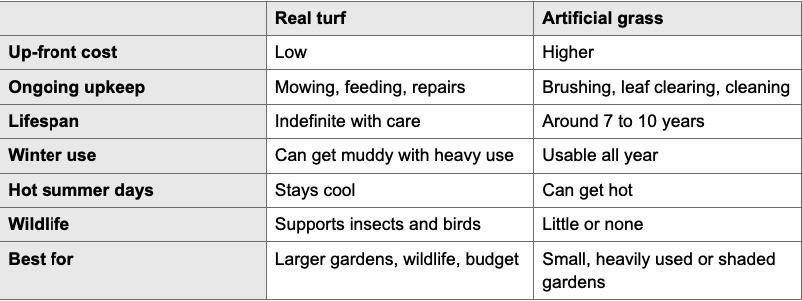
  • It is much cheaper to buy. The HomeOwners Alliance puts multipurpose turf from around £2 to £3 per square metre, compared with around £20 per square metre for artificial grass, before installation.
  • It is cool and soft underfoot, even on a hot day.
  • It lets rain soak in and supports insects, birds and soil life.
  • It looks and smells like a real garden.

The downsides are just as real. It needs regular mowing from spring to autumn, feeding and occasional repair. Heavy use, dogs and shade all take their toll, and in a wet Manchester winter a busy lawn can quickly turn to mud, especially where gardens sit on heavy clay.

The case for artificial grass

Artificial grass solves different problems.

  • No mowing, and it looks green all year.
  • It is usable in winter, without muddy paws or boots coming into the house.
  • It copes with heavy use in small family gardens where real grass wears out.
  • It works where grass will not grow, such as heavily shaded corners.

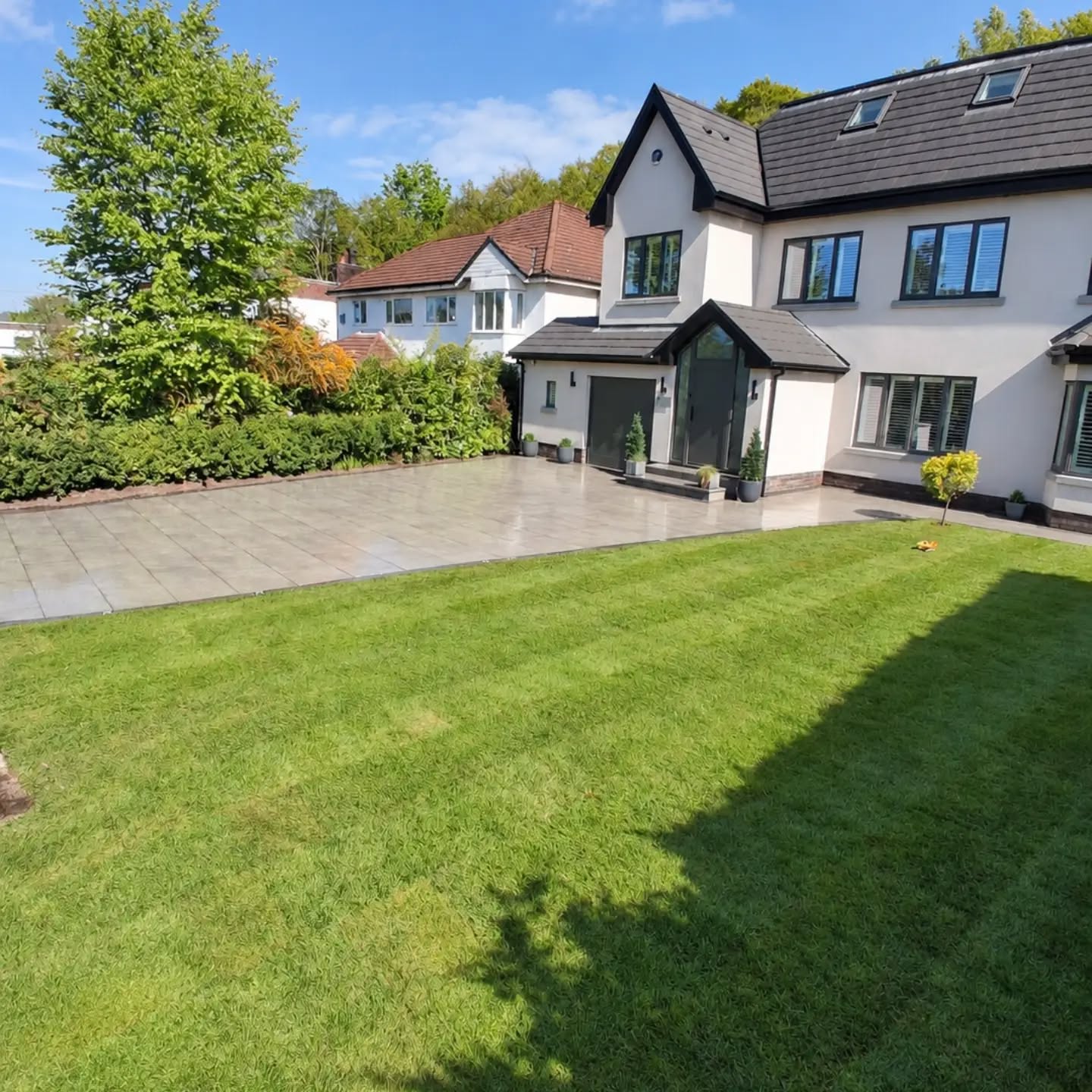
Garden in Greater Manchester with new turf and a sandstone patio laid by Manchester Landscaping

But it has drawbacks worth knowing. It costs more up front, and the HomeOwners Alliance says a well-installed, well-looked-after artificial lawn lasts approximately 7 to 10 years. It can get uncomfortably hot in direct sun. It is made of plastic, offers no habitat for wildlife, and has become a target for criticism: Ideal Home put artificial lawns at the top of its list of garden trends to avoid in 2026. And it is not maintenance-free. It still needs brushing, leaf clearing and occasional cleaning.

Questions to ask before you choose

  • How will the garden actually be used: children, dogs, entertaining or mostly for looking at?
  • How much sun does the lawn area get?
  • How much time do you want to spend on upkeep?
  • What is your budget now, and over the next ten years?
  • How long are you planning to stay in the house?

Your answers usually settle the artificial grass vs real grass question clearly, or point to a mix of both.

Why autumn is the best time to lay turf

If you are leaning towards a real lawn, now is the time. The RHS says turf is best laid in mid-autumn, and can be laid any time from mid-autumn to early spring when the soil is not too wet or frosty. Cooler temperatures and regular rain help the roots establish without constant watering, so the lawn is ready to use by spring.

Preparation is what makes or breaks a new lawn. The RHS recommends removing perennial weeds, digging or rotovating to around 20 to 25cm to break up compaction, working in organic matter, letting the ground settle and then levelling it before the turf goes down. On compacted or clay soils, this groundwork matters even more.

If you choose artificial grass, do not cut corners on the base

Most of the artificial lawns that look tired after a couple of years have the same problem: what is underneath. A proper installation involves digging out the old lawn, building a compacted, free-draining sub-base, adding a weed membrane and fixing the edges securely. In a climate as wet as ours, drainage through the base is essential, otherwise water sits under the surface and the lawn smells and sags.

Good-quality grass, installed properly, will look far better for far longer than a cheap product laid on sand.

The middle ground

You do not have to choose one or the other for the whole garden. Some of our favourite gardens combine both:

  • a real lawn in the open, sunny area, with artificial grass in a shady strip or a heavily used play corner
  • a smaller lawn surrounded by a generous patio, which cuts mowing without losing the green
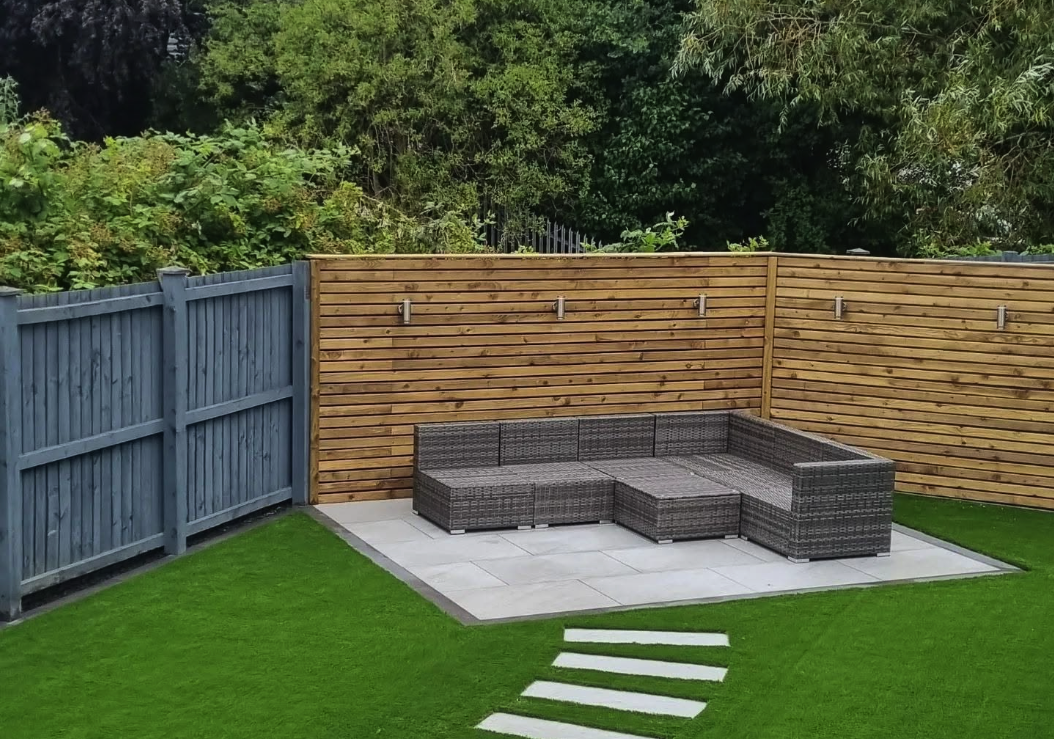
  • artificial grass alongside a natural stone patio for a neat, low-maintenance finish, like the Kandla Grey sandstone garden in our projects

Get advice for your garden

The right answer depends on your garden, your household and how you want to use the space. We are happy to give you an honest recommendation, even if that means a simpler job.

Manchester Landscaping has been creating gardens across Hyde, Tameside and Greater Manchester since 2014, from new lawns and artificial grass to patios, decking, fencing and driveways. Get in touch for a free quote and we will help you choose the lawn that suits your garden, and lay it properly.

From Heatwaves to Heavy Rain: How to Build a Weather-Resistant Garden in Manchester

Manchester may be famous for rain, but modern garden design needs to prepare for both extremes. Longer dry spells can leave lawns and planting stressed, while sudden heavy rainfall can expose poor levels, blocked drainage and badly planned patios.

The solution is not to design for one type of weather. It is to create a garden that works through changing conditions and still feels practical for everyday family life.

Get the levels and drainage right first

Before choosing paving colours or fence styles, the site needs to drain properly. Patios should be laid to appropriate falls and surface water should be directed safely away from buildings. Where necessary, drainage channels or other solutions can be incorporated into the hard landscaping.

This is one of the most important differences between a garden that looks good for six months and one that continues performing for years.

Use paving without turning the garden into a heat trap

A large patio is brilliant for entertaining and low-maintenance living, but a garden made almost entirely from hard surfaces can feel hot during summer and may generate more runoff in heavy rain.

Combining paving with lawn, planting, gravel or raised beds creates a more comfortable and balanced outdoor space.

Choose tougher planting

Plants that are suited to the actual garden conditions are more likely to thrive with less intervention. Sunny, free-draining areas can support drought-tolerant grasses and perennials, while wetter or shaded parts of the garden need an entirely different planting approach.

The important point is to stop treating every border in the same way.

Think carefully about lawns

Natural turf remains popular because it creates a soft, usable surface for children, pets and family gardens. During dry spells it can turn brown, but established lawns often recover when wetter weather returns.

For homeowners who want less maintenance, the garden can also combine smaller lawn areas with paving, decking or artificial grass depending on how the space will actually be used.

Add useful shade and shelter

Fencing, pergolas, trees and seating positions can all affect how comfortable a garden feels. A good design considers sun direction, prevailing weather and privacy so that the garden has places to use in different conditions.

Make maintenance realistic

The best low-maintenance garden is not necessarily the one with the least planting. It is the one where every element has a purpose and can be maintained easily. Access to borders, sensible planting densities, durable materials and a clear layout all help.

Manchester Landscaping provides patios and paving, decking, fencing, artificial grass, turf laying and driveways across Manchester and Hyde. Whether you are upgrading one part of the garden or planning a full transformation, building weather resilience into the project from the start can save problems later.

Contact Manchester Landscaping to arrange a free design consultation and discuss your outdoor space.

Why Is My Manchester Garden Waterlogged?

A garden that becomes wet after heavy rain is not unusual. The warning signs begin when puddles remain for days, the lawn constantly feels soft underfoot or muddy areas return every time the weather changes.

Waterlogging can prevent you from using the garden, damage lawns and make it difficult for plants to thrive. Over time, persistent moisture may also contribute to slippery paving, unstable surfaces and problems around fencing or garden structures.

Waterlogged gardens are a common landscaping challenge across Manchester. Frequent wet weather can expose issues with compacted ground, heavy soil, incorrect levels and inadequate drainage. In urban areas, extensive paving and development can make it even harder for rainfall to soak naturally into the ground.

The right solution begins with understanding why the water is collecting.

How Can I Tell If My Garden Is Waterlogged?

The most obvious sign is standing water that remains long after the rain has stopped. However, drainage problems are not always as dramatic as visible flooding.

Your lawn may feel spongy when you walk across it. Grass can become thin, yellow or covered with moss. Plants may struggle despite receiving plenty of water, and the soil may develop an unpleasant smell.

You might also notice water collecting in the same part of the garden, mud being carried into the house or paving that has started to move.

These symptoms suggest that water is entering the ground faster than it can drain away.

Why Do Manchester Gardens Become Waterlogged?

There is rarely one explanation that applies to every property. In many gardens, several factors are working together.

The soil may drain slowly, while the layout also directs water towards a low section of lawn. A large patio may increase surface runoff, or building work may have left compacted material beneath the topsoil.

A professional assessment considers the complete garden, including its levels, soil, paving, neighbouring land and existing drainage.

Heavy Clay Soil

Clay soil holds water because its fine particles sit closely together. During prolonged rain, the limited spaces between those particles fill with water and the ground becomes saturated.

Once saturated, the soil cannot absorb rainfall quickly enough. Water then remains on the surface or gathers in the lowest parts of the garden.

Clay soil is not necessarily poor soil. It can retain nutrients and support a wide range of planting, but it needs to be managed correctly. Adding a thin layer of new soil to the surface will not resolve a serious underlying drainage problem.

Depending on the conditions, improvements may involve aeration, suitable organic matter, changes to the garden’s levels or a dedicated drainage system.

Compacted Ground Beneath the Lawn

Soil becomes compacted when repeated pressure removes the spaces that allow air and water to move through it.

Regular foot traffic can contribute to surface compaction, but more severe problems often result from construction work or heavy machinery. This is particularly common in new-build gardens, where a relatively thin covering of soil may sit over heavily compacted subsoil or leftover building material.

The lawn can look acceptable in dry weather but quickly become waterlogged when it rains.

Aeration can help with mild compaction close to the surface. If the deeper soil structure is badly affected, more extensive preparation may be required.

The Garden Slopes Towards a Low Point

Water naturally moves downhill. If the garden has a sunken lawn, uneven ground or a slope leading towards the house, rainwater will repeatedly follow that route.

In narrow terraced gardens, even a small difference in level can concentrate water in one area. Raised neighbouring gardens may also contribute runoff, especially when the ground is already saturated.

Correcting this problem may involve reshaping the ground, creating terraces or intercepting the water before it reaches the lowest point.

Levels need to be planned carefully so the water is not simply transferred to another part of the garden or onto a neighbouring property.

Too Much Hard Landscaping

Patios, paths and other hard surfaces are important parts of a practical garden, but they reduce the amount of exposed ground available to absorb rainfall.

When a large proportion of the garden is covered with impermeable materials, water moves across the surface instead of soaking into the soil. If the paving does not have a suitable fall or drainage system, runoff can be directed straight into the lawn.

This does not mean that paving should be avoided. A well-designed garden can combine attractive patios and paving with planted beds, lawns, gravel and appropriate drainage.

The important thing is to consider the whole garden rather than designing each surface separately.

Poorly Installed Patios and Paths

A patio should be installed with a subtle gradient that moves water towards a suitable drainage point. If the surface is completely flat, slopes towards the house or has sunk in places, puddles can form.

Water may then spill from the patio into the surrounding lawn or collect beside the property.

Blocked drainage channels can cause similar symptoms. Leaves, soil and moss can prevent water from entering or travelling through the system.

If paving has started to move, simply clearing a channel may not be enough. The foundations and levels may need to be assessed.

Water Is Flowing in from a Neighbouring Property

In closely built areas, water does not always originate within your own boundary. It may flow down from a higher garden, adjoining path, extension or paved area.

Changes made to a neighbouring garden can sometimes alter the direction or volume of surface runoff.

Understanding the route of the water is important. Installing drainage only in the wettest patch may fail if the incoming water has not been intercepted or managed correctly.

Damaged or Inadequate Drainage

Some gardens already contain drainage, but the system may no longer work as intended.

Pipes can become blocked with soil and roots. Channels may fill with debris, while older drainage may not have enough capacity for changes made to the garden.

Extensions, new patios and other alterations can all increase the amount of surface water entering the system.

A drainage system must also have a suitable destination for the water. A pipe that merely moves it into another saturated part of the garden will offer little improvement.

How Do You Fix a Waterlogged Garden?

The correct solution depends on the cause, severity and layout of the garden. There is no single drainage product that works everywhere.

For some gardens, improving the soil and reducing compaction may be enough. Others require changes to levels, underground drainage or a wider redesign.

The goal is to manage the water safely without creating another problem elsewhere.

Aerate and Improve the Soil

Aeration creates openings in compacted soil, allowing air, water and nutrients to move more freely.

This may help lawns with mild surface compaction. Appropriate organic matter can also improve the structure of heavy soil over time.

However, aeration has limits. It will not correct a garden that slopes in the wrong direction or resolve deeply compacted ground left after construction.

The soil should be assessed before large amounts of material are added. Using the wrong amendment or simply covering the problem can make drainage worse.

Install a French Drain or Land Drain

A French drain usually consists of a perforated pipe installed within a gravel-filled trench. It collects water from the surrounding ground and carries it towards a suitable discharge point.

Land drains can be useful in lawns, along the base of slopes or beside hard-landscaped areas. They may also intercept water arriving from higher ground.

Positioning is critical. The depth, gradient and destination of the pipe determine whether the system works effectively.

An underground drain should never be installed without first establishing where the collected water can safely go.

Create a Soakaway

A soakaway collects water and allows it to disperse gradually into the surrounding soil.

It can be an effective option where the ground has suitable infiltration and enough space is available. However, a soakaway may perform poorly in heavy clay or already saturated ground.

Its location also matters. It should not be positioned where retained water could affect buildings or neighbouring land.

Ground conditions should be tested before assuming that a soakaway is the best solution.

Correct the Garden’s Levels

If water is repeatedly collecting in a low area, regrading the garden may provide a more effective long-term result than treating the puddle itself.

This could involve adjusting the lawn, introducing gentle falls, creating level terraces or building retaining structures.

The new layout should move water away from the property while maintaining comfortable access through the garden.

Correct levels can also improve the appearance of the space, making patios, lawns and planted areas feel more connected.

Add Drainage Channels

Linear channels can collect water from patios and paths before it reaches the house or lawn.

They are commonly installed near doors, along the edge of paving or across a route where surface water naturally travels.

The channel needs to sit at the correct level and connect to an appropriate outlet. It should also remain accessible so leaves and debris can be removed.

Installing a visible channel without planning the complete drainage route is unlikely to provide a lasting solution.

Introduce More Permeable Areas

Planting beds, lawns, gravel and other permeable features help slow rainfall and allow more water to soak into the ground.

In heavily paved gardens, even a modest increase in planted space can reduce the amount of surface runoff. However, the location and soil conditions still need to be considered.

A border cannot absorb unlimited water, particularly when the soil is already saturated. Permeable areas work best as part of a wider drainage and landscaping plan.

Build Raised Beds

Raised beds can create better growing conditions for plants that struggle in wet soil.

They lift the root zone above the saturated ground and allow the soil mix to be selected for the intended planting. Raised beds can also introduce structure, seating and changes in height to a flat garden.

They do not remove water from the wider space, so they should support rather than replace a proper drainage solution.

Choose Plants Suited to Damp Conditions

Some parts of a garden may always retain more moisture than others. Choosing plants that naturally tolerate damp soil can turn these areas into attractive features.

Moisture-tolerant trees, shrubs, grasses and perennials can bring colour and movement to parts of the garden where conventional planting struggles.

Plants will not solve flooding that threatens the property or makes the garden unusable. However, the right planting can complement a drainage strategy and help the garden respond more naturally to rainfall.

Can Landscaping Make Drainage Problems Worse?

Yes. Poorly planned landscaping can reduce natural drainage, trap water or direct it towards the house.

Common mistakes include raising the ground too close to the property, installing paving without suitable falls and covering most of the garden with impermeable surfaces.

Drainage should be considered at the design stage rather than added after the work is complete. Foundations, levels, materials and planted areas all affect how water moves through the finished garden.

This is why experienced landscapers look beneath the surface before focusing on the final appearance.

When Should You Speak to a Landscaper?

It is worth seeking professional advice when water remains for several days, repeatedly collects beside the house or prevents you from using a large part of the garden.

You should also arrange an assessment if paving is sinking, retaining structures are moving or the problem appeared after construction or landscaping work.

A professional landscaper can investigate the likely cause and determine whether the solution involves soil improvement, drainage, changes to levels or a more complete garden transformation.

Stop Letting a Waterlogged Garden Limit Your Home

A wet and muddy garden can feel like wasted space, but the problem can often be resolved with the right planning. Once the soil, levels and movement of water are properly understood, the garden can be redesigned to remain practical and attractive throughout the seasons.

The Manchester Landscaping Company creates bespoke gardens, patios and outdoor spaces across Manchester and the surrounding areas. We can assess the drainage challenges affecting your property and develop a landscaping solution designed around the garden, the ground conditions and the way you want to use the space.

Explore our recent landscaping projects, then contact The Manchester Landscaping Company or call 0161 222 4465 to discuss your garden. Let’s turn that wet, difficult space into a garden you can enjoy again.

Ready to Fix Your Waterlogged Garden?

You do not have to accept a muddy lawn, standing water or an outdoor space that becomes unusable whenever it rains. The right drainage and landscaping solution can transform your garden into a practical, attractive space that works throughout the year.

The Manchester Landscaping Company designs and builds bespoke gardens across Manchester and the surrounding areas. We will assess the soil, levels and movement of water before recommending a solution designed around your property.

Contact The Manchester Landscaping Company today or call 0161 222 4465 to arrange a consultation and take the first step towards a drier, more enjoyable garden.

Driveway Drainage Manchester: Do You Need a Permeable Driveway?

Driveway Drainage Manchester: Do You Need a Permeable Driveway?

Thinking about a new driveway in Manchester?

Then there is one question you need to ask before choosing resin, block paving, tarmac or gravel.

Where is the rainwater going to go?

It might not sound exciting. However, driveway drainage is one of the most important parts of any driveway project.

Manchester gets plenty of rain. So if your driveway is not built properly, water can quickly become a problem.

Puddles, flooding, slippery surfaces, damaged paving and water running towards your home are all signs that your driveway drainage is not working.

At Manchester Landscaping Company, we help homeowners across Manchester create driveways that look smart, work properly and stand the test of time.

Why Driveway Drainage Matters in Manchester

A driveway should do more than look good.

It needs to handle cars, foot traffic, weather and surface water.

Poor driveway drainage can cause several problems, including:

  1. Water pooling on the surface
  2. Slippery areas in winter
  3. Damage to paving or tarmac
  4. Water running towards the house
  5. Drainage problems at the front of the property
  6. A driveway that fails earlier than it should

In Manchester, this matters even more because wet weather is part of everyday life.

That is why a new driveway should always be planned with drainage in mind.

What Are the Driveway Drainage Rules?

For front gardens in England, planning rules focus heavily on surface water.

If you are covering more than five square metres with a traditional impermeable surface, planning permission may be needed unless the water drains to a permeable area, such as a lawn or border. The UK Planning Portal explains that traditional impermeable driveways over five square metres need planning permission when they do not provide a way for water to run to a permeable area.

Government guidance also says you will not usually need planning permission if your driveway uses a permeable surface, such as gravel, permeable block paving or porous asphalt, or if rainwater is directed to a lawn or border to drain naturally.

This is why permeable driveway options are becoming more popular.

They help manage rainwater and can reduce the risk of drainage problems.

What Is a Permeable Driveway?

A permeable driveway allows water to drain through the surface or into a suitable drainage area.

This helps reduce water running onto the road, pavement or towards your home.

Common permeable driveway options include:

  1. Permeable block paving
  2. Gravel driveways
  3. Resin bound driveways with the correct base
  4. Porous asphalt
  5. Driveways designed with drainage channels and soakaway areas

The right option depends on your property, the ground conditions and the look you want.

Resin Driveways in Manchester

Resin driveways are popular because they look clean, modern and stylish.

They are available in different colours and finishes. They can also create strong kerb appeal.

Resin bound driveways can be permeable when installed with the correct base and specification.

However, the base matters.

If resin is installed over a poor or unsuitable surface, problems can appear later. Cracks, movement and drainage issues can all affect the finished driveway.

So, if you are considering a resin driveway in Manchester, make sure the full build up is planned properly.

Block Paving Driveways in Manchester

Block paving is another popular choice for driveways.

It offers a classic look and works well with many Manchester homes.

Block paving also gives plenty of design flexibility. You can choose different colours, patterns and edging styles.

Permeable block paving is available and can be a good option when drainage is a concern.

A well installed block paved driveway should include proper excavation, a strong sub-base, correct levels and suitable drainage.

Tarmac Driveways in Manchester

Tarmac is often chosen because it is practical, simple and cost effective.

It can work well for larger driveways and properties where a clean, neat finish is needed.

However, standard tarmac is usually an impermeable surface.

That means drainage needs to be planned carefully. Water may need to be directed to a lawn, border, soakaway or drainage system.

If you want a tarmac driveway in Manchester, make sure drainage is part of the conversation from the start.

Gravel Driveways in Manchester

Gravel can be one of the more affordable driveway options.

It is also naturally permeable when installed correctly.

Gravel driveways can suit rural, traditional and larger properties. They can also work well for homeowners who want a softer look.

However, gravel needs the right edging, base and maintenance.

Without proper installation, gravel can move, spread and become uneven.

How Much Does a Driveway Cost in Manchester?

Driveway cost depends on the size, surface, access, preparation and drainage.

As a broad guide, Checkatrade states that UK driveway costs can range from around £60 per square metre for gravel up to around £120 per square metre for resin bound driveways.

A local Manchester driveway guide also gives example prices for a medium 40 to 50 square metre driveway, with tarmac often lower cost and resin or block paving usually higher depending on the finish.

As a simple guide, many Manchester driveway projects may fall into these ranges:

  1. Small driveway: £3,000 to £6,000
  2. Medium driveway: £6,000 to £12,000
  3. Large driveway: £12,000 plus

These are only guide prices.

The real cost depends on your property, the existing ground, drainage requirements and the finish you choose.

Signs Your Current Driveway Needs Replaced

Not sure whether it is time for a new driveway?

Here are some common signs:

  1. Water sits on the surface
  2. The driveway is cracked or uneven
  3. Weeds keep coming through
  4. The surface looks tired or stained
  5. Cars are sinking into soft areas
  6. The driveway does not drain properly
  7. You need more parking space
  8. The front of your home looks dated

If your driveway has several of these problems, repairs may not be enough.

A new driveway may be the better long term option.

Why Cheap Driveways Can Cost More Later

A cheap driveway can seem like a good idea at first.

However, the problems often appear after heavy rain, winter weather or regular use.

Poor preparation can lead to sinking, cracking, puddles and loose areas.

The sub-base is one of the most important parts of the driveway. If it is not right, the surface will not last.

Good driveway installation is about more than the top layer.

It is about excavation, preparation, drainage, levels, edging and finish.

What Is the Best Driveway Surface for Manchester?

There is no single best driveway surface for every home.

The best option depends on your budget, property style, drainage needs and how much maintenance you want.

Resin is a great choice if you want a modern, clean finish.

Block paving is ideal if you want a classic driveway with design options.

Tarmac works well if you want a practical and cost effective surface.

Gravel can be good for drainage and a softer traditional look.

The most important thing is choosing the right surface for your home and making sure it is installed properly.

Driveway Drainage Manchester: What Should You Ask Before Starting?

Before you agree to a driveway quote, ask these questions:

  1. Is the surface permeable?
  2. Where will the rainwater go?
  3. Do I need planning permission?
  4. Will water run towards my house?
  5. Does the driveway need a drainage channel?
  6. Is the base suitable for the surface?
  7. Do I need a dropped kerb?
  8. Will the driveway handle regular vehicle use?

These questions can save you problems later.

They also help you compare quotes properly.

Get a Driveway Quote in Manchester

A new driveway can completely change the front of your home.

It can improve kerb appeal, create better parking and make your property look smarter.

However, it needs to be built properly.

At Manchester Landscaping Company, we install driveways in Manchester with proper preparation, drainage and attention to detail.

Whether you are considering resin, block paving, tarmac, gravel or a full front garden transformation, we can help.

Contact Manchester Landscaping Company today to arrange a free driveway quote in Manchester.


FAQ

Do I need planning permission for a driveway in Manchester?

You may need planning permission if you are laying an impermeable driveway over more than five square metres and the water does not drain to a permeable area. Permeable surfaces or designs that direct water to a lawn or border may not need planning permission. Always check your property and local situation before starting.

What is the best driveway surface for drainage?

Permeable block paving, gravel and correctly installed resin bound driveways can all help with drainage. The best option depends on your property and the existing ground.

How much does a driveway cost in Manchester?

As a guide, many driveway projects in Manchester may range from around £3,000 to £12,000 plus. Larger driveways, poor access, drainage work and premium materials can increase the cost.

Is resin better than block paving?

Resin is often chosen for a clean, modern finish. Block paving is chosen for a classic look and design flexibility. Both can work well when installed properly.

Why does my driveway keep holding water?

Water pooling is often caused by poor levels, poor drainage, an unsuitable base or surface movement. A proper site visit can identify the cause.

garden landscaping cost Manchester

Garden Landscaping Cost Manchester: How Much Should You Budget?

How much does it cost to landscape a garden in Manchester?

It is one of the first questions homeowners ask when they start thinking about improving their outdoor space.

The honest answer is simple.

It depends on the size of your garden, the condition of the ground, the materials you choose and the finish you want.

A small garden refresh may cost a few thousand pounds. A full garden makeover with patios, porcelain paving, fencing, turf, drainage, raised beds and outdoor living areas can cost much more.

At Manchester Landscaping Company, we help homeowners across Manchester create gardens that look great, work properly and suit real family life.

Whether you want a simple patio or a complete garden transformation, it helps to understand what affects the cost before you start.

What Affects Garden Landscaping Cost in Manchester?

No two gardens are the same.

Some gardens are flat, clear and easy to access. Others are uneven, wet, overgrown or full of old paving, decking and concrete that needs removed first.

The main things that affect garden landscaping cost in Manchester include:

  1. The size of the garden
  2. Access to the garden
  3. Ground conditions
  4. Drainage issues
  5. Waste removal
  6. Paving choice
  7. Fencing requirements
  8. Turf or artificial grass
  9. Steps, walls and raised areas
  10. The overall finish you want

Manchester weather also matters.

Rain, poor drainage and heavy clay ground can all affect how a garden performs over time. That is why proper preparation is so important.

A garden should not just look good when it is finished. It should also drain properly, feel safe and last for years.

Small Garden Landscaping Cost in Manchester

A small garden landscaping project in Manchester may cost around £3,000 to £7,000.

This type of project may include a small patio, fresh turf, decorative stone, simple fencing repairs, edging or a low maintenance garden refresh.

It is a good option if your garden feels tired but does not need a full redesign.

For example, you may want to replace an old seating area, tidy up the lawn and make the garden easier to use in summer.

Small changes can still make a big difference when the layout is planned properly.

Medium Garden Makeover Cost in Manchester

A medium garden makeover in Manchester may cost around £8,000 to £20,000.

This could include porcelain paving, new fencing, turf, drainage, raised beds, steps, decorative stone and a better garden layout.

This is where the garden starts to feel like a proper outdoor living space.

You can create a patio for seating, a lawn for children or pets, a clean pathway, a BBQ area and better privacy.

For many Manchester homeowners, this level of project gives the best balance between budget, impact and long term value.

Full Garden Transformation Cost in Manchester

A full garden transformation in Manchester can cost from £20,000 upwards.

Larger projects may include premium porcelain paving, retaining walls, artificial grass, pergolas, lighting, planting, fencing, drainage and multiple seating areas.

This type of project is ideal if your current garden does not work at all.

Maybe the levels are wrong. Maybe the space is wasted. Maybe the patio is too small. Maybe the lawn is always muddy. Or maybe you simply want a garden that feels more modern, stylish and usable.

A full garden makeover can completely change how you use your home.

Patio Costs in Manchester

A patio is often the heart of the garden.

It gives you a solid, usable space for outdoor dining, BBQs, garden furniture and relaxing.

The cost of a patio in Manchester depends on the size, paving choice, preparation and drainage.

Basic paving will usually cost less. Porcelain paving will usually cost more, but it gives a cleaner and more premium finish.

The most important part of any patio is the groundwork.

If the base is not right, the patio may move, sink or hold water. A well built patio needs proper preparation, correct levels and good drainage.

Porcelain Paving in Manchester

Porcelain paving is one of the most popular choices for modern garden landscaping in Manchester.

It looks sharp, clean and high end. It also works well with both modern and traditional homes.

Porcelain paving is low maintenance, hard wearing and easy to clean. This makes it ideal for busy families who want a smart garden without constant upkeep.

It can be used for patios, pathways, seating areas and outdoor dining spaces.

Although porcelain paving usually costs more than standard paving, many homeowners choose it because of the finish and long term appearance.

Fencing Costs in Manchester

Fencing can have a big impact on your garden.

It improves privacy, adds security and gives the whole space a clean boundary.

Old, damaged or leaning fencing can make even a nice garden look tired.

The cost of fencing depends on the length of the boundary, the style of fence, the ground conditions and whether old fencing needs removed.

Fencing is often included as part of a full garden makeover because it helps frame the finished space.

Turf, Artificial Grass and Low Maintenance Gardens

The right lawn choice depends on how you use your garden.

Natural turf can look great and feel fresh. It is ideal for families who like a traditional garden.

Artificial grass can work well for homeowners who want a low maintenance option. It is also popular with families, pet owners and people who want the garden to look tidy all year round.

Some gardens work best with a mix of paving, grass, decorative stone and planting.

A good garden layout should suit your lifestyle, not just look good in photos.

Drainage and Groundwork

Drainage is one of the biggest things to think about when landscaping a garden in Manchester.

If water sits on the lawn or patio, the garden can become hard to use.

Poor drainage can also damage paving, lawns, fencing and raised areas over time.

That is why drainage and groundwork should never be ignored.

Before any garden is finished, the base needs to be right. The levels need to work. Water needs somewhere to go.

Good groundwork is what makes a garden last.

Is Cheap Landscaping Worth It?

Cheap landscaping can be tempting.

However, the cheapest quote is not always the best value.

Poor preparation can lead to sinking paving, loose slabs, water pooling, failed lawns and fencing problems.

A garden may look fine on day one. The real test is how it looks after winter, heavy rain and daily use.

Professional landscaping is about more than the final finish.

It is about building the garden properly from the ground up.

Can Landscaping Add Value to Your Home?

Yes, a well designed garden can improve the look, feel and value of your property.

It can also make your home easier to enjoy.

A smart patio gives you more living space. A better lawn gives children and pets somewhere to play. New fencing improves privacy. Porcelain paving can make the garden feel modern and premium.

For many homeowners, garden landscaping is not just about adding value for a future sale.

It is about getting more from the home they already have.

How to Plan Your Garden Landscaping Budget

Before you start, think about how you want to use the garden.

Ask yourself:

Do you want a space for BBQs?

Do you need a child friendly garden?

Do you want low maintenance?

Do you need better privacy?

Is drainage a problem?

Do you want a modern patio?

Would porcelain paving suit your home?

Once you know what matters most, it becomes easier to plan your budget.

You do not always need everything at once. However, you do need a clear plan so the garden works properly.

Get a Garden Landscaping Quote in Manchester

The best way to know the cost of landscaping your garden is to arrange a proper quote.

At Manchester Landscaping Company, we can look at your garden, discuss your ideas and give you clear advice based on your space, budget and goals.

Whether you need a small garden refresh, a new patio, fencing, turf, porcelain paving or a complete garden transformation, we can help.

Contact Manchester Landscaping Company today for garden landscaping in Manchester.

FAQ

How much does garden landscaping cost in Manchester?

Most garden landscaping projects in Manchester range from around £3,000 to £25,000 plus. The final cost depends on garden size, access, materials, drainage and the amount of preparation needed.

What is the cheapest way to improve a garden?

Simple changes such as a new patio, fresh turf, decorative stone, fencing repairs and a tidy layout can improve a garden without needing a full redesign.

Is porcelain paving worth the extra cost?

Porcelain paving is often worth it if you want a modern, low maintenance and premium finish. It is easy to clean and works well for patios and seating areas.

Why is garden drainage important in Manchester?

Manchester gets plenty of rain, so drainage matters. Poor drainage can lead to muddy lawns, water pooling and paving problems.

Do I need a full garden makeover?

Not always. Some gardens only need a patio, lawn or fencing upgrade. Other gardens need a full redesign if the layout, levels or drainage do not work.

Landscaping in Manchester: Is Your Garden Ready for Summer?

Landscaping Manchester: Is Your Garden Ready for Summer?

Summer is nearly here.

The lighter nights are coming. The BBQ is about to come back out. The garden furniture is getting dusted off. Family, friends, kids, dogs, drinks, food and long evenings outside are all just around the corner.

So here is the big question.

Is your garden actually ready?

Because for many homeowners across Manchester, the answer is no.

The patio is tired. The lawn is patchy. The fencing is leaning. The garden feels messy. The driveway lets the front of the house down. And every year, people say the same thing.

“This year we’ll sort the garden.”

Then summer comes. Summer goes. And nothing changes.

At Manchester Landscaping Company, we help homeowners turn tired outdoor spaces into gardens they actually want to use.

We provide professional landscaping in Manchester, including patios, porcelain paving, driveways, fencing, pergolas, lawns, garden rooms, water features and complete garden makeovers.

If you want your garden ready for summer, now is the time to start.

Your Garden Should Feel Like Part of Your Home

Your garden should not be wasted space.

It should feel like another room. It should give you somewhere to relax, entertain, eat, work, play and enjoy your home more.

A well designed garden can completely change how you live.

You can have a patio for outdoor dining. You can have a pergola for shade and structure. You can add fencing for privacy. You can create a clean lawn for the kids or pets. You can even add a garden room for work, fitness or extra living space.

Good landscaping does not just make your garden look better. It makes your full home feel better.

That is why more homeowners are investing in landscaping in Manchester.

Porcelain Paving in Manchester

Porcelain paving is one of the most popular choices for modern gardens.

It looks clean, sharp and high end. It also works well with both modern and traditional homes.

Porcelain paving is hard wearing, low maintenance and easy to clean. That makes it perfect for busy families who want a smart garden without constant upkeep.

A new porcelain patio can create the perfect space for BBQs, garden furniture, outdoor dining and summer evenings.

It also gives your garden a premium finish that looks great all year round.

If you are looking for porcelain paving in Manchester, Manchester Landscaping Company can help you choose the right colour, style and layout for your home.

Patios Built for Real Life

A patio is often the heart of the garden.

It is where you sit. It is where you eat. It is where friends gather. It is where the BBQ goes. It is where summer actually happens.

However, a good patio is not just about laying slabs.

The ground needs proper preparation. Drainage needs to be right. The levels need to work. The materials need to suit the house. The finish needs to last.

Manchester Landscaping Company installs patios across Manchester using quality materials such as porcelain paving, sandstone, limestone and other popular paving options.

A well built patio can turn an unused garden into one of the best spaces in your home.

Driveways That Make Your Home Look Smarter

Your driveway is one of the first things people see.

If it looks cracked, stained, uneven or messy, it can make the whole property feel tired.

A new driveway can transform the front of your home. It can improve kerb appeal, create better parking and make the property feel cleaner and more valuable.

We install driveways in Manchester for homeowners who want a practical and professional finish.

Whether you need more parking space, better drainage or a complete front garden redesign, a new driveway can make a huge difference.

If you are planning landscaping in Manchester, do not forget the front of the property.

Pergolas and Outdoor Living Areas

Pergolas have become a major garden trend.

And it is easy to see why.

A pergola adds height, structure and style. It can create a clear seating area, dining space, hot tub area or outdoor kitchen zone.

Add lighting, climbing plants, furniture or outdoor heating, and you can create a garden space that feels special.

For many homeowners, a pergola turns a normal patio into a proper outdoor living area.

It also helps the garden feel designed, not just decorated.

Fencing for Privacy, Security and Style

Old fencing can ruin the look of a garden.

Even if the patio is nice and the lawn is clean, damaged fencing can make the whole space feel unfinished.

New fencing gives your garden privacy, security and a clean boundary. It also helps frame the full design.

Manchester Landscaping Company can install fencing as part of a wider garden makeover.

This works well alongside patios, lawns, raised beds, steps, pergolas and garden rooms.

If you want your garden to feel more private, fencing is a smart place to start.

Garden Rooms in Manchester

Garden rooms are no longer just a luxury idea.

They are now one of the most practical ways to add space to your home.

A garden room can become a home office, gym, bar, studio, salon, games room or quiet retreat.

For many homeowners, it is cheaper and easier than moving house. It can also make much better use of the garden.

However, a garden room looks best when the landscaping around it is finished properly.

Imagine walking from your house across a porcelain patio, through a clean landscaped garden and into your own private office or garden bar.

That is outdoor living done properly.

Lawns, Artificial Grass and Low Maintenance Gardens

Not every garden needs to be high maintenance.

Some homeowners want natural grass. Others want artificial grass. Many want a mix of paving, planting and low maintenance areas.

The right choice depends on how you use your garden.

Do you have children?

Do you have dogs?

Do you want less maintenance?

Do you enjoy gardening?

Do you want a clean space for entertaining?

Manchester Landscaping Company can help you design a garden that suits your lifestyle, not just a garden that looks good in a photo.

Ponds, Pools and Water Features

Water can add a real wow factor to your garden.

A pond can bring calm, wildlife and character. A water feature can create a luxury feel. A pool or spa area can turn your garden into a private retreat.

These features need careful planning.

The layout matters. The drainage matters. The paving matters. Safety also matters.

When water features are designed properly, they can become one of the most impressive parts of your garden.

They work especially well with porcelain paving, lighting, planting and outdoor seating areas.

Full Garden Landscaping in Manchester

Some gardens need more than one new feature.

They need a full plan.

A full landscaping project can include removing the old garden, changing the layout, building a patio, installing fencing, improving drainage, adding a lawn, creating steps, building retaining walls and adding planting areas.

This gives you the chance to design your garden around how you actually live.

Do you want a low maintenance garden?

Do you need space for children or pets?

Would you like a better area for entertaining?

Do you need more privacy?

Do you want your garden to work better all year round?

These questions matter.

Good landscaping is not just about making a garden look nice. It is about making the space useful, practical and enjoyable.

Why Manchester Homeowners Are Upgrading Their Gardens

More people are spending money on their homes.

But many forget the garden.

That is a mistake.

Your garden can add lifestyle value every single week. It can also improve the look and feel of the whole property.

A tired garden can make your home feel smaller. A well designed garden can make it feel bigger.

A poor driveway can damage first impressions. A new driveway can improve kerb appeal straight away.

An unused garden can feel like a burden. A landscaped garden can become your favourite part of the house.

That is why landscaping in Manchester is becoming more popular with homeowners who want better outdoor living.

Why Choose Manchester Landscaping Company?

Choosing the right landscaping company matters.

A garden may look simple when finished. However, the work underneath is what makes it last.

The base needs to be right. The drainage needs to be planned. The levels need to work. The materials need to be installed correctly.

Manchester Landscaping Company focuses on proper preparation, quality workmanship and a finish that stands the test of time.

We help homeowners across Manchester create gardens, patios, driveways and outdoor spaces that look great and work properly.

Our services include:

  1. Garden landscaping in Manchester
  2. Porcelain paving
  3. Patios
  4. Driveways
  5. Fencing
  6. Pergolas
  7. Lawns and artificial grass
  8. Garden rooms
  9. Ponds and water features
  10. Full garden transformations

Is Your Garden Ready for Summer?

Summer is nearly here.

You can spend another year looking at the same tired garden.

Or you can finally create the outdoor space you have been talking about.

A new patio can give you somewhere to sit. Porcelain paving can give your garden a premium finish. A pergola can create a proper outdoor living area. Fencing can give you privacy. A garden room can give you extra space. A full landscaping project can transform the way you use your home.

If you want professional landscaping in Manchester, now is the time to start planning.

Contact Manchester Landscaping Company

Ready to get your garden ready for summer?

Contact Manchester Landscaping Company today to arrange a free quote.

We provide landscaping, patios, driveways, porcelain paving, fencing, pergolas, lawns, garden rooms and full garden makeovers across Manchester.

How Landscaping and a New Driveway Can Add Value to Your Property in Manchester

How Landscaping and a New Driveway Can Add Value to Your Property in Manchester

When most homeowners think about adding value to their property, they usually think about kitchens, bathrooms, loft conversions, or extensions.

And yes, those things can help.

But one of the most overlooked ways to increase both the appeal and value of a home is by improving what people see first and use every day. That means the front of the property, the driveway, and the garden.

At The Manchester Landscaping Company, we regularly speak to homeowners who want to improve their outside space for their own enjoyment, but there is also a very real financial benefit to getting this right. Good landscaping, a professionally installed driveway, or a combination of both can transform how a property looks, feels, and is valued.

If you are thinking about upgrading your home, here is why investing in landscaping or a new driveway in Manchester can be one of the smartest moves you make.

First Impressions Matter More Than Most People Realise

Before anyone steps through your front door, they have already started forming an opinion about your home.

The driveway, front garden, entrance path, borders, fencing, and overall presentation all play a part in that first impression. If the outside looks tired, uneven, dated, or poorly maintained, it can drag down the perception of the whole property, even if the inside is beautifully finished.

On the other hand, a clean, well-designed driveway and a smart landscaped garden can instantly make a house look more valuable, more cared for, and more desirable.

This is one of the reasons homeowners across Manchester are investing more in exterior improvements. A property that looks finished on the outside often feels more premium overall.

How Landscaping Can Add Value to Your Property

Landscaping is about far more than making a garden look tidy.

Done properly, it improves the way a space functions, how it flows, and how much use you get from it. A good garden design can turn wasted outdoor space into a proper extension of the home. That matters to buyers, and it matters to you while you live there.

For example, a garden with a well-laid patio, defined seating area, practical planting, neat lawn or artificial grass, and quality pathways feels more usable and more complete than a patchy lawn with no structure.

In a city like Manchester, where people want to make the most of every part of their property, that added usability can make a real difference. Families want entertaining space. Professionals want low-maintenance gardens. Buyers want something they can enjoy without having to start from scratch.

A professionally landscaped garden can help deliver all of that.

A New Driveway Can Improve Appearance and Practicality

A new driveway does not just make a property look better. It also improves practicality, convenience, and day-to-day life.

Off-road parking is a big deal for many homeowners and buyers, particularly in busy parts of Manchester where street parking can be limited or frustrating. A well-built driveway creates a stronger sense of arrival and can make a home far more appealing.

It also gives the impression that the property has been invested in properly.

Whether it is block paving, resin, tarmac, or another finish, the right driveway should complement the style of the house and provide a durable, attractive surface that stands up to regular use and the British weather.

A tired, cracked or uneven driveway can make the whole property feel dated. A new one can do the exact opposite.

Why Landscaping and a New Driveway Work Even Better Together

If you really want to maximise the impact, doing both together often creates the strongest result.

That is because the front and rear of the property start to feel joined up. The whole home looks more considered, more polished, and more valuable. Instead of one part looking smart and the other looking neglected, the property presents well from every angle.

This is especially effective when the driveway materials, edging, planting, pathways, and garden design all work together visually.

A cohesive exterior upgrade can make the property feel larger, cleaner, and more premium. It shows attention to detail. It makes the home more enjoyable to live in. And if you ever decide to sell, it can make the property stand out much more strongly in photos and viewings.

Buyers Often Pay More for Homes That Feel Finished

Many buyers are not just purchasing bricks and mortar. They are buying convenience, lifestyle, and the feeling that they will not need to spend a fortune after moving in.

That is why exterior improvements can have such a strong effect.

A home with a beautiful driveway and a landscaped garden often feels move-in ready. It reduces the mental list of jobs a buyer thinks they will need to do. It can also make the house feel better maintained overall, even before they inspect the inside in detail.

This does not mean every pound spent outside translates directly into the same amount of value added. Property does not work as simply as that. But high-quality landscaping and driveway work can absolutely improve desirability, saleability, and the perceived value of a home.

And in many cases, that is exactly what helps achieve a stronger sale price.

Which Exterior Improvements Tend to Add the Most Value?

Not every project has the same effect.

In our experience, the most valuable exterior improvements are the ones that combine appearance with practicality. A few examples include a professionally installed driveway with proper edging and drainage, a patio that creates a usable entertaining area, tidy and structured planting, clear pathways, good fencing, and a garden layout that feels intentional rather than random.

Low-maintenance design is also attractive, especially for busy homeowners and buyers who want the space to look good without becoming a burden.

The key is quality. Poor workmanship will not add value. In fact, it can do the opposite. That is why it pays to work with an experienced landscaping and driveway company that understands both the aesthetic and structural side of the job.

Why This Matters in Manchester

Manchester homeowners are increasingly looking at how to improve their current property rather than move straight away. With moving costs, higher borrowing costs, and the hassle of relocating, making the most of your existing home often makes more sense.

That is where landscaping and driveway upgrades come in.

They can dramatically improve the look and use of a property without the disruption of major structural building work. They also allow you to enjoy the benefits now, rather than treating everything purely as an investment for later.

In many areas of Manchester, kerb appeal makes a genuine difference. A smart, well-presented exterior helps a property stand out, whether you are in a suburban family area, a busy commuter location, or a more premium residential street.

Choosing the Right Company Matters

If your goal is to add value to your property, the finish and standard of work matter just as much as the idea itself.

A rushed driveway, poor drainage, cheap materials, or badly planned landscaping can quickly undo any potential benefit. On the other hand, a well-designed and professionally installed project can elevate the whole feel of the property.

At The Manchester Landscaping Company, we believe the best results come from combining design, function, and workmanship. Whether you are considering a new driveway, a full garden transformation, or both together, the aim should always be the same. To create an outside space that looks fantastic, works properly, and enhances the value of your home.

Final Thoughts

If you are wondering how to add value to your property in Manchester, do not overlook the outside.

A well-designed garden can extend the living space and improve lifestyle. A new driveway can enhance kerb appeal and practicality. And when both are done together, they can completely transform the way a property looks and feels.

For homeowners who want to improve their home now while also making a smart long-term investment, landscaping and driveway upgrades are hard to ignore.

If you are ready to enhance your property with high-quality exterior work, The Manchester Landscaping Company can help you create a result that is attractive, practical, and built to last.

Landscaping Manchester: How to Use Your Garden All Year Round

Landscaping Manchester: How to Use Your Garden All Year Round

A well-designed garden should not only look good in summer.

It should work for you in every season. A great outdoor space gives you somewhere to relax in spring, entertain in summer, enjoy in autumn, and still appreciate in winter. That is where smart landscaping makes a real difference.

At Manchester Landscaping Company, we create gardens that do more than look impressive for a few warm weeks. We design and build outdoor spaces that feel practical, attractive, and usable throughout the year.

If you are thinking about landscaping in Manchester, here is how the right design can help you enjoy your garden in every season.

Spring: A Fresh Start for the Garden

Spring is when gardens begin to come back to life.

It is the season when people start planning outdoor projects, cleaning up tired spaces, and looking forward to using the garden again. A well-landscaped garden makes that transition much easier.

Patios become more useful as the weather improves. Pathways help you move around the garden without damaging wet grass or muddy borders. Raised beds and planting areas add colour and structure as the season changes.

Spring is also a great time to think about layout. A clean design, fresh lawn, and well-planned planting can prepare the garden for the months ahead and make the whole space feel brighter.

Summer: Outdoor Living at Its Best

Summer is when the garden often becomes an extra room of the home.

This is the time for outdoor dining, relaxing in the sun, hosting friends, and spending long evenings outside. A good landscaping scheme helps you make the most of that time.

Many homeowners in Manchester choose patios, pergolas, seating areas, outdoor lighting, and level lawns to create a space that works for family life and entertaining. Shade also matters in summer. A pergola or covered seating area can make the space more comfortable on hotter days.

When the garden is laid out properly, it becomes easier to use and much more enjoyable to spend time in.

Autumn: Keeping the Garden Inviting

Autumn often gets overlooked, but it can be one of the best times to enjoy a garden.

The colours change, the air feels crisp, and the space can still feel warm and welcoming with the right features in place. This is where strong landscaping really proves its value.

Quality paving, smart edging, evergreen planting, and sheltered seating areas help the garden stay tidy and attractive as the weather changes. Outdoor lighting can also make a huge difference. It helps the garden feel more inviting and allows you to enjoy the space later into the day.

A garden should not stop working just because summer ends.

Winter: A Garden That Still Adds Value

Many people ignore their garden in winter, but a well-designed space still matters during the colder months.

Good landscaping helps a garden stay neat, structured, and easy to manage through wet and cold weather. Durable paving, proper drainage, safe pathways, and strong hard landscaping all become even more important in winter.

Evergreen planting, retaining walls, fencing, and raised features can also help the garden keep its shape and visual appeal. While you may not use the space in January the same way you use it in July, it should still feel like an asset to your home.

That is the benefit of landscaping done properly.

Landscaping That Works in Every Season

The best gardens do more than look good for a short time.

They support the way you live all year round. They give you places to sit, walk, entertain, relax, and enjoy the outdoors in every season. That is why thoughtful landscaping is such a smart investment.

At Manchester Landscaping Company, we create bespoke gardens for homeowners who want outdoor spaces that work in spring, summer, autumn, and winter.

If you are planning a garden transformation and want to get more from your outdoor space, we are here to help.