Artificial Grass or Real Turf? An Honest Guide for Manchester Gardens

Two things are happening at once this autumn. It is the best time of year to lay a new lawn, and artificial grass has rarely been talked about, for good and bad reasons.

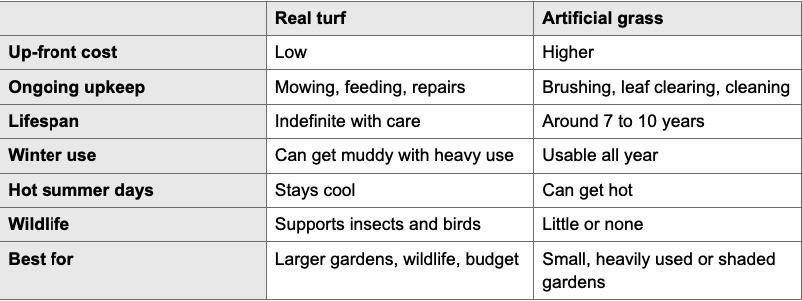
We install both artificial grass and real turf across Hyde, Tameside and Greater Manchester, so we do not have a reason to push you one way. Here is an honest look at artificial grass vs real grass to help you decide what suits your garden.

The case for real turf

A natural lawn is still the classic choice for a family garden, and there is a lot to like about it.

  • It is much cheaper to buy. The HomeOwners Alliance puts multipurpose turf from around £2 to £3 per square metre, compared with around £20 per square metre for artificial grass, before installation.
  • It is cool and soft underfoot, even on a hot day.
  • It lets rain soak in and supports insects, birds and soil life.
  • It looks and smells like a real garden.

The downsides are just as real. It needs regular mowing from spring to autumn, feeding and occasional repair. Heavy use, dogs and shade all take their toll, and in a wet Manchester winter a busy lawn can quickly turn to mud, especially where gardens sit on heavy clay.

The case for artificial grass

Artificial grass solves different problems.

  • No mowing, and it looks green all year.
  • It is usable in winter, without muddy paws or boots coming into the house.
  • It copes with heavy use in small family gardens where real grass wears out.
  • It works where grass will not grow, such as heavily shaded corners.

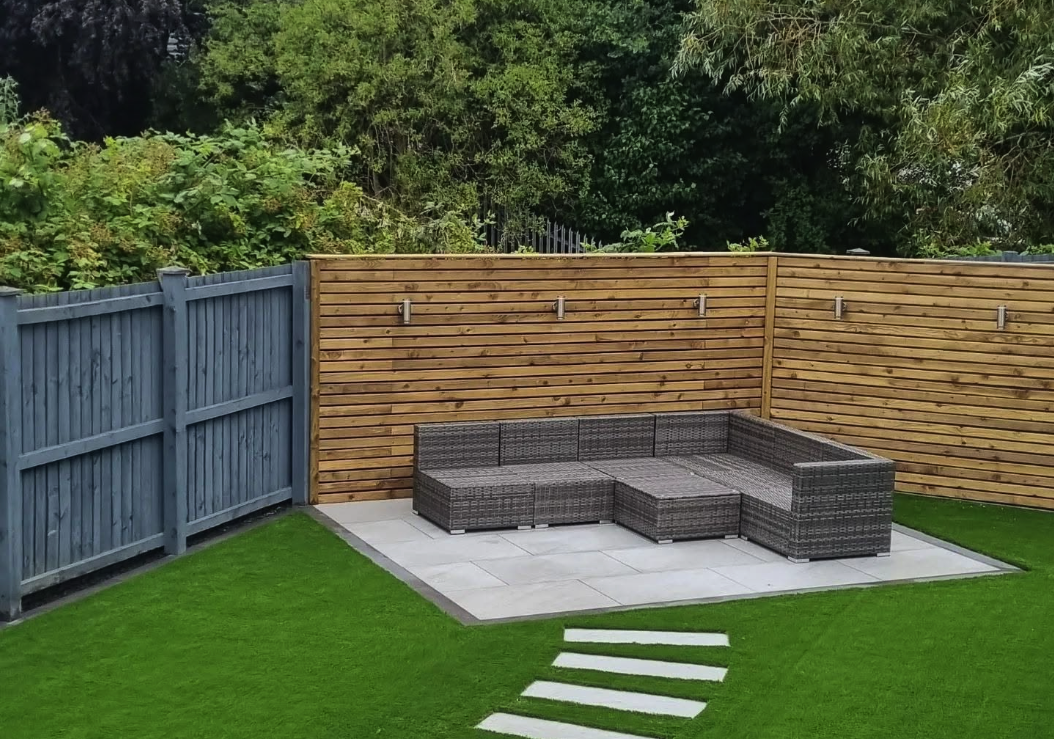
Garden in Greater Manchester with new turf and a sandstone patio laid by Manchester Landscaping

But it has drawbacks worth knowing. It costs more up front, and the HomeOwners Alliance says a well-installed, well-looked-after artificial lawn lasts approximately 7 to 10 years. It can get uncomfortably hot in direct sun. It is made of plastic, offers no habitat for wildlife, and has become a target for criticism: Ideal Home put artificial lawns at the top of its list of garden trends to avoid in 2026. And it is not maintenance-free. It still needs brushing, leaf clearing and occasional cleaning.

Questions to ask before you choose

  • How will the garden actually be used: children, dogs, entertaining or mostly for looking at?
  • How much sun does the lawn area get?
  • How much time do you want to spend on upkeep?
  • What is your budget now, and over the next ten years?
  • How long are you planning to stay in the house?

Your answers usually settle the artificial grass vs real grass question clearly, or point to a mix of both.

Why autumn is the best time to lay turf

If you are leaning towards a real lawn, now is the time. The RHS says turf is best laid in mid-autumn, and can be laid any time from mid-autumn to early spring when the soil is not too wet or frosty. Cooler temperatures and regular rain help the roots establish without constant watering, so the lawn is ready to use by spring.

Preparation is what makes or breaks a new lawn. The RHS recommends removing perennial weeds, digging or rotovating to around 20 to 25cm to break up compaction, working in organic matter, letting the ground settle and then levelling it before the turf goes down. On compacted or clay soils, this groundwork matters even more.

If you choose artificial grass, do not cut corners on the base

Most of the artificial lawns that look tired after a couple of years have the same problem: what is underneath. A proper installation involves digging out the old lawn, building a compacted, free-draining sub-base, adding a weed membrane and fixing the edges securely. In a climate as wet as ours, drainage through the base is essential, otherwise water sits under the surface and the lawn smells and sags.

Good-quality grass, installed properly, will look far better for far longer than a cheap product laid on sand.

The middle ground

You do not have to choose one or the other for the whole garden. Some of our favourite gardens combine both:

  • a real lawn in the open, sunny area, with artificial grass in a shady strip or a heavily used play corner
  • a smaller lawn surrounded by a generous patio, which cuts mowing without losing the green
  • artificial grass alongside a natural stone patio for a neat, low-maintenance finish, like the Kandla Grey sandstone garden in our projects

Get advice for your garden

The right answer depends on your garden, your household and how you want to use the space. We are happy to give you an honest recommendation, even if that means a simpler job.

Manchester Landscaping has been creating gardens across Hyde, Tameside and Greater Manchester since 2014, from new lawns and artificial grass to patios, decking, fencing and driveways. Get in touch for a free quote and we will help you choose the lawn that suits your garden, and lay it properly.

From Heatwaves to Heavy Rain: How to Build a Weather-Resistant Garden in Manchester

Manchester may be famous for rain, but modern garden design needs to prepare for both extremes. Longer dry spells can leave lawns and planting stressed, while sudden heavy rainfall can expose poor levels, blocked drainage and badly planned patios.

The solution is not to design for one type of weather. It is to create a garden that works through changing conditions and still feels practical for everyday family life.

Get the levels and drainage right first

Before choosing paving colours or fence styles, the site needs to drain properly. Patios should be laid to appropriate falls and surface water should be directed safely away from buildings. Where necessary, drainage channels or other solutions can be incorporated into the hard landscaping.

This is one of the most important differences between a garden that looks good for six months and one that continues performing for years.

Use paving without turning the garden into a heat trap

A large patio is brilliant for entertaining and low-maintenance living, but a garden made almost entirely from hard surfaces can feel hot during summer and may generate more runoff in heavy rain.

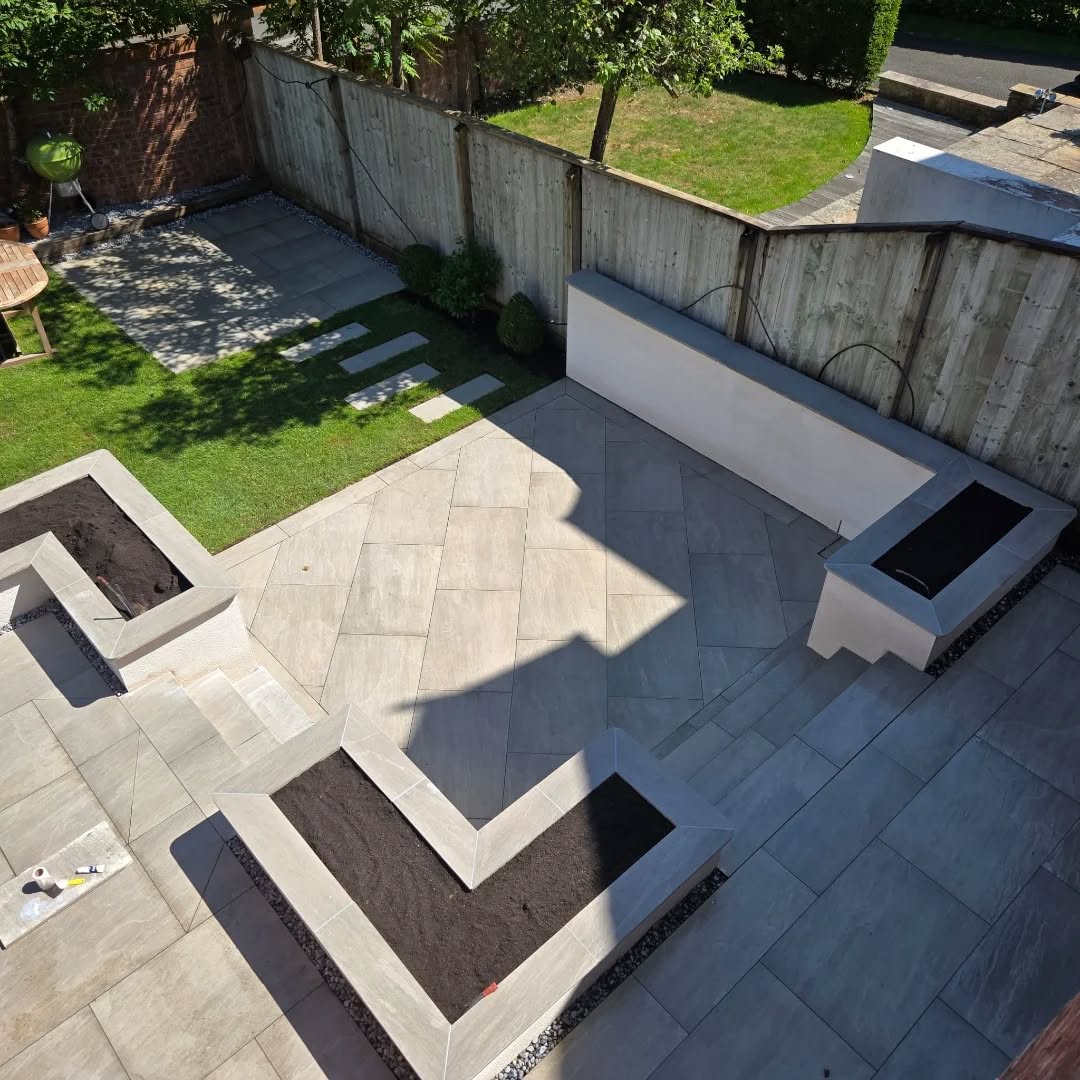
Combining paving with lawn, planting, gravel or raised beds creates a more comfortable and balanced outdoor space.

Choose tougher planting

Plants that are suited to the actual garden conditions are more likely to thrive with less intervention. Sunny, free-draining areas can support drought-tolerant grasses and perennials, while wetter or shaded parts of the garden need an entirely different planting approach.

The important point is to stop treating every border in the same way.

Think carefully about lawns

Natural turf remains popular because it creates a soft, usable surface for children, pets and family gardens. During dry spells it can turn brown, but established lawns often recover when wetter weather returns.

For homeowners who want less maintenance, the garden can also combine smaller lawn areas with paving, decking or artificial grass depending on how the space will actually be used.

Add useful shade and shelter

Fencing, pergolas, trees and seating positions can all affect how comfortable a garden feels. A good design considers sun direction, prevailing weather and privacy so that the garden has places to use in different conditions.

Make maintenance realistic

The best low-maintenance garden is not necessarily the one with the least planting. It is the one where every element has a purpose and can be maintained easily. Access to borders, sensible planting densities, durable materials and a clear layout all help.

Manchester Landscaping provides patios and paving, decking, fencing, artificial grass, turf laying and driveways across Manchester and Hyde. Whether you are upgrading one part of the garden or planning a full transformation, building weather resilience into the project from the start can save problems later.

Contact Manchester Landscaping to arrange a free design consultation and discuss your outdoor space.

Why Is My Manchester Garden Waterlogged?

A garden that becomes wet after heavy rain is not unusual. The warning signs begin when puddles remain for days, the lawn constantly feels soft underfoot or muddy areas return every time the weather changes.

Waterlogging can prevent you from using the garden, damage lawns and make it difficult for plants to thrive. Over time, persistent moisture may also contribute to slippery paving, unstable surfaces and problems around fencing or garden structures.

Waterlogged gardens are a common landscaping challenge across Manchester. Frequent wet weather can expose issues with compacted ground, heavy soil, incorrect levels and inadequate drainage. In urban areas, extensive paving and development can make it even harder for rainfall to soak naturally into the ground.

The right solution begins with understanding why the water is collecting.

How Can I Tell If My Garden Is Waterlogged?

The most obvious sign is standing water that remains long after the rain has stopped. However, drainage problems are not always as dramatic as visible flooding.

Your lawn may feel spongy when you walk across it. Grass can become thin, yellow or covered with moss. Plants may struggle despite receiving plenty of water, and the soil may develop an unpleasant smell.

You might also notice water collecting in the same part of the garden, mud being carried into the house or paving that has started to move.

These symptoms suggest that water is entering the ground faster than it can drain away.

Why Do Manchester Gardens Become Waterlogged?

There is rarely one explanation that applies to every property. In many gardens, several factors are working together.

The soil may drain slowly, while the layout also directs water towards a low section of lawn. A large patio may increase surface runoff, or building work may have left compacted material beneath the topsoil.

A professional assessment considers the complete garden, including its levels, soil, paving, neighbouring land and existing drainage.

Heavy Clay Soil

Clay soil holds water because its fine particles sit closely together. During prolonged rain, the limited spaces between those particles fill with water and the ground becomes saturated.

Once saturated, the soil cannot absorb rainfall quickly enough. Water then remains on the surface or gathers in the lowest parts of the garden.

Clay soil is not necessarily poor soil. It can retain nutrients and support a wide range of planting, but it needs to be managed correctly. Adding a thin layer of new soil to the surface will not resolve a serious underlying drainage problem.

Depending on the conditions, improvements may involve aeration, suitable organic matter, changes to the garden’s levels or a dedicated drainage system.

Compacted Ground Beneath the Lawn

Soil becomes compacted when repeated pressure removes the spaces that allow air and water to move through it.

Regular foot traffic can contribute to surface compaction, but more severe problems often result from construction work or heavy machinery. This is particularly common in new-build gardens, where a relatively thin covering of soil may sit over heavily compacted subsoil or leftover building material.

The lawn can look acceptable in dry weather but quickly become waterlogged when it rains.

Aeration can help with mild compaction close to the surface. If the deeper soil structure is badly affected, more extensive preparation may be required.

The Garden Slopes Towards a Low Point

Water naturally moves downhill. If the garden has a sunken lawn, uneven ground or a slope leading towards the house, rainwater will repeatedly follow that route.

In narrow terraced gardens, even a small difference in level can concentrate water in one area. Raised neighbouring gardens may also contribute runoff, especially when the ground is already saturated.

Correcting this problem may involve reshaping the ground, creating terraces or intercepting the water before it reaches the lowest point.

Levels need to be planned carefully so the water is not simply transferred to another part of the garden or onto a neighbouring property.

Too Much Hard Landscaping

Patios, paths and other hard surfaces are important parts of a practical garden, but they reduce the amount of exposed ground available to absorb rainfall.

When a large proportion of the garden is covered with impermeable materials, water moves across the surface instead of soaking into the soil. If the paving does not have a suitable fall or drainage system, runoff can be directed straight into the lawn.

This does not mean that paving should be avoided. A well-designed garden can combine attractive patios and paving with planted beds, lawns, gravel and appropriate drainage.

The important thing is to consider the whole garden rather than designing each surface separately.

Poorly Installed Patios and Paths

A patio should be installed with a subtle gradient that moves water towards a suitable drainage point. If the surface is completely flat, slopes towards the house or has sunk in places, puddles can form.

Water may then spill from the patio into the surrounding lawn or collect beside the property.

Blocked drainage channels can cause similar symptoms. Leaves, soil and moss can prevent water from entering or travelling through the system.

If paving has started to move, simply clearing a channel may not be enough. The foundations and levels may need to be assessed.

Water Is Flowing in from a Neighbouring Property

In closely built areas, water does not always originate within your own boundary. It may flow down from a higher garden, adjoining path, extension or paved area.

Changes made to a neighbouring garden can sometimes alter the direction or volume of surface runoff.

Understanding the route of the water is important. Installing drainage only in the wettest patch may fail if the incoming water has not been intercepted or managed correctly.

Damaged or Inadequate Drainage

Some gardens already contain drainage, but the system may no longer work as intended.

Pipes can become blocked with soil and roots. Channels may fill with debris, while older drainage may not have enough capacity for changes made to the garden.

Extensions, new patios and other alterations can all increase the amount of surface water entering the system.

A drainage system must also have a suitable destination for the water. A pipe that merely moves it into another saturated part of the garden will offer little improvement.

How Do You Fix a Waterlogged Garden?

The correct solution depends on the cause, severity and layout of the garden. There is no single drainage product that works everywhere.

For some gardens, improving the soil and reducing compaction may be enough. Others require changes to levels, underground drainage or a wider redesign.

The goal is to manage the water safely without creating another problem elsewhere.

Aerate and Improve the Soil

Aeration creates openings in compacted soil, allowing air, water and nutrients to move more freely.

This may help lawns with mild surface compaction. Appropriate organic matter can also improve the structure of heavy soil over time.

However, aeration has limits. It will not correct a garden that slopes in the wrong direction or resolve deeply compacted ground left after construction.

The soil should be assessed before large amounts of material are added. Using the wrong amendment or simply covering the problem can make drainage worse.

Install a French Drain or Land Drain

A French drain usually consists of a perforated pipe installed within a gravel-filled trench. It collects water from the surrounding ground and carries it towards a suitable discharge point.

Land drains can be useful in lawns, along the base of slopes or beside hard-landscaped areas. They may also intercept water arriving from higher ground.

Positioning is critical. The depth, gradient and destination of the pipe determine whether the system works effectively.

An underground drain should never be installed without first establishing where the collected water can safely go.

Create a Soakaway

A soakaway collects water and allows it to disperse gradually into the surrounding soil.

It can be an effective option where the ground has suitable infiltration and enough space is available. However, a soakaway may perform poorly in heavy clay or already saturated ground.

Its location also matters. It should not be positioned where retained water could affect buildings or neighbouring land.

Ground conditions should be tested before assuming that a soakaway is the best solution.

Correct the Garden’s Levels

If water is repeatedly collecting in a low area, regrading the garden may provide a more effective long-term result than treating the puddle itself.

This could involve adjusting the lawn, introducing gentle falls, creating level terraces or building retaining structures.

The new layout should move water away from the property while maintaining comfortable access through the garden.

Correct levels can also improve the appearance of the space, making patios, lawns and planted areas feel more connected.

Add Drainage Channels

Linear channels can collect water from patios and paths before it reaches the house or lawn.

They are commonly installed near doors, along the edge of paving or across a route where surface water naturally travels.

The channel needs to sit at the correct level and connect to an appropriate outlet. It should also remain accessible so leaves and debris can be removed.

Installing a visible channel without planning the complete drainage route is unlikely to provide a lasting solution.

Introduce More Permeable Areas

Planting beds, lawns, gravel and other permeable features help slow rainfall and allow more water to soak into the ground.

In heavily paved gardens, even a modest increase in planted space can reduce the amount of surface runoff. However, the location and soil conditions still need to be considered.

A border cannot absorb unlimited water, particularly when the soil is already saturated. Permeable areas work best as part of a wider drainage and landscaping plan.

Build Raised Beds

Raised beds can create better growing conditions for plants that struggle in wet soil.

They lift the root zone above the saturated ground and allow the soil mix to be selected for the intended planting. Raised beds can also introduce structure, seating and changes in height to a flat garden.

They do not remove water from the wider space, so they should support rather than replace a proper drainage solution.

Choose Plants Suited to Damp Conditions

Some parts of a garden may always retain more moisture than others. Choosing plants that naturally tolerate damp soil can turn these areas into attractive features.

Moisture-tolerant trees, shrubs, grasses and perennials can bring colour and movement to parts of the garden where conventional planting struggles.

Plants will not solve flooding that threatens the property or makes the garden unusable. However, the right planting can complement a drainage strategy and help the garden respond more naturally to rainfall.

Can Landscaping Make Drainage Problems Worse?

Yes. Poorly planned landscaping can reduce natural drainage, trap water or direct it towards the house.

Common mistakes include raising the ground too close to the property, installing paving without suitable falls and covering most of the garden with impermeable surfaces.

Drainage should be considered at the design stage rather than added after the work is complete. Foundations, levels, materials and planted areas all affect how water moves through the finished garden.

This is why experienced landscapers look beneath the surface before focusing on the final appearance.

When Should You Speak to a Landscaper?

It is worth seeking professional advice when water remains for several days, repeatedly collects beside the house or prevents you from using a large part of the garden.

You should also arrange an assessment if paving is sinking, retaining structures are moving or the problem appeared after construction or landscaping work.

A professional landscaper can investigate the likely cause and determine whether the solution involves soil improvement, drainage, changes to levels or a more complete garden transformation.

Stop Letting a Waterlogged Garden Limit Your Home

A wet and muddy garden can feel like wasted space, but the problem can often be resolved with the right planning. Once the soil, levels and movement of water are properly understood, the garden can be redesigned to remain practical and attractive throughout the seasons.

The Manchester Landscaping Company creates bespoke gardens, patios and outdoor spaces across Manchester and the surrounding areas. We can assess the drainage challenges affecting your property and develop a landscaping solution designed around the garden, the ground conditions and the way you want to use the space.

Explore our recent landscaping projects, then contact The Manchester Landscaping Company or call 0161 222 4465 to discuss your garden. Let’s turn that wet, difficult space into a garden you can enjoy again.

Ready to Fix Your Waterlogged Garden?

You do not have to accept a muddy lawn, standing water or an outdoor space that becomes unusable whenever it rains. The right drainage and landscaping solution can transform your garden into a practical, attractive space that works throughout the year.

The Manchester Landscaping Company designs and builds bespoke gardens across Manchester and the surrounding areas. We will assess the soil, levels and movement of water before recommending a solution designed around your property.

Contact The Manchester Landscaping Company today or call 0161 222 4465 to arrange a consultation and take the first step towards a drier, more enjoyable garden.
Driveway Drainage Manchester: Do You Need a Permeable Driveway?

Driveway Drainage Manchester: Do You Need a Permeable Driveway?

Thinking about a new driveway in Manchester?

Then there is one question you need to ask before choosing resin, block paving, tarmac or gravel.

Where is the rainwater going to go?

It might not sound exciting. However, driveway drainage is one of the most important parts of any driveway project.

Manchester gets plenty of rain. So if your driveway is not built properly, water can quickly become a problem.

Puddles, flooding, slippery surfaces, damaged paving and water running towards your home are all signs that your driveway drainage is not working.

At Manchester Landscaping Company, we help homeowners across Manchester create driveways that look smart, work properly and stand the test of time.

Why Driveway Drainage Matters in Manchester

A driveway should do more than look good.

It needs to handle cars, foot traffic, weather and surface water.

Poor driveway drainage can cause several problems, including:

  1. Water pooling on the surface
  2. Slippery areas in winter
  3. Damage to paving or tarmac
  4. Water running towards the house
  5. Drainage problems at the front of the property
  6. A driveway that fails earlier than it should

In Manchester, this matters even more because wet weather is part of everyday life.

That is why a new driveway should always be planned with drainage in mind.

What Are the Driveway Drainage Rules?

For front gardens in England, planning rules focus heavily on surface water.

If you are covering more than five square metres with a traditional impermeable surface, planning permission may be needed unless the water drains to a permeable area, such as a lawn or border. The UK Planning Portal explains that traditional impermeable driveways over five square metres need planning permission when they do not provide a way for water to run to a permeable area.

Government guidance also says you will not usually need planning permission if your driveway uses a permeable surface, such as gravel, permeable block paving or porous asphalt, or if rainwater is directed to a lawn or border to drain naturally.

This is why permeable driveway options are becoming more popular.

They help manage rainwater and can reduce the risk of drainage problems.

What Is a Permeable Driveway?

A permeable driveway allows water to drain through the surface or into a suitable drainage area.

This helps reduce water running onto the road, pavement or towards your home.

Common permeable driveway options include:

  1. Permeable block paving
  2. Gravel driveways
  3. Resin bound driveways with the correct base
  4. Porous asphalt
  5. Driveways designed with drainage channels and soakaway areas

The right option depends on your property, the ground conditions and the look you want.

Resin Driveways in Manchester

Resin driveways are popular because they look clean, modern and stylish.

They are available in different colours and finishes. They can also create strong kerb appeal.

Resin bound driveways can be permeable when installed with the correct base and specification.

However, the base matters.

If resin is installed over a poor or unsuitable surface, problems can appear later. Cracks, movement and drainage issues can all affect the finished driveway.

So, if you are considering a resin driveway in Manchester, make sure the full build up is planned properly.

Block Paving Driveways in Manchester

Block paving is another popular choice for driveways.

It offers a classic look and works well with many Manchester homes.

Block paving also gives plenty of design flexibility. You can choose different colours, patterns and edging styles.

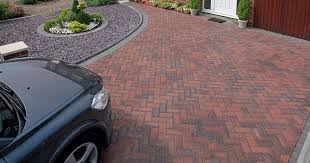
Permeable block paving is available and can be a good option when drainage is a concern.

A well installed block paved driveway should include proper excavation, a strong sub-base, correct levels and suitable drainage.

Tarmac Driveways in Manchester

Tarmac is often chosen because it is practical, simple and cost effective.

It can work well for larger driveways and properties where a clean, neat finish is needed.

However, standard tarmac is usually an impermeable surface.

That means drainage needs to be planned carefully. Water may need to be directed to a lawn, border, soakaway or drainage system.

If you want a tarmac driveway in Manchester, make sure drainage is part of the conversation from the start.

Gravel Driveways in Manchester

Gravel can be one of the more affordable driveway options.

It is also naturally permeable when installed correctly.

Gravel driveways can suit rural, traditional and larger properties. They can also work well for homeowners who want a softer look.

However, gravel needs the right edging, base and maintenance.

Without proper installation, gravel can move, spread and become uneven.

How Much Does a Driveway Cost in Manchester?

Driveway cost depends on the size, surface, access, preparation and drainage.

As a broad guide, Checkatrade states that UK driveway costs can range from around £60 per square metre for gravel up to around £120 per square metre for resin bound driveways.

A local Manchester driveway guide also gives example prices for a medium 40 to 50 square metre driveway, with tarmac often lower cost and resin or block paving usually higher depending on the finish.

As a simple guide, many Manchester driveway projects may fall into these ranges:

  1. Small driveway: £3,000 to £6,000
  2. Medium driveway: £6,000 to £12,000
  3. Large driveway: £12,000 plus

These are only guide prices.

The real cost depends on your property, the existing ground, drainage requirements and the finish you choose.

Signs Your Current Driveway Needs Replaced

Not sure whether it is time for a new driveway?

Here are some common signs:

  1. Water sits on the surface
  2. The driveway is cracked or uneven
  3. Weeds keep coming through
  4. The surface looks tired or stained
  5. Cars are sinking into soft areas
  6. The driveway does not drain properly
  7. You need more parking space
  8. The front of your home looks dated

If your driveway has several of these problems, repairs may not be enough.

A new driveway may be the better long term option.

Why Cheap Driveways Can Cost More Later

A cheap driveway can seem like a good idea at first.

However, the problems often appear after heavy rain, winter weather or regular use.

Poor preparation can lead to sinking, cracking, puddles and loose areas.

The sub-base is one of the most important parts of the driveway. If it is not right, the surface will not last.

Good driveway installation is about more than the top layer.

It is about excavation, preparation, drainage, levels, edging and finish.

What Is the Best Driveway Surface for Manchester?

There is no single best driveway surface for every home.

The best option depends on your budget, property style, drainage needs and how much maintenance you want.

Resin is a great choice if you want a modern, clean finish.

Block paving is ideal if you want a classic driveway with design options.

Tarmac works well if you want a practical and cost effective surface.

Gravel can be good for drainage and a softer traditional look.

The most important thing is choosing the right surface for your home and making sure it is installed properly.

Driveway Drainage Manchester: What Should You Ask Before Starting?

Before you agree to a driveway quote, ask these questions:

  1. Is the surface permeable?
  2. Where will the rainwater go?
  3. Do I need planning permission?
  4. Will water run towards my house?
  5. Does the driveway need a drainage channel?
  6. Is the base suitable for the surface?
  7. Do I need a dropped kerb?
  8. Will the driveway handle regular vehicle use?

These questions can save you problems later.

They also help you compare quotes properly.

Get a Driveway Quote in Manchester

A new driveway can completely change the front of your home.

It can improve kerb appeal, create better parking and make your property look smarter.

However, it needs to be built properly.

At Manchester Landscaping Company, we install driveways in Manchester with proper preparation, drainage and attention to detail.

Whether you are considering resin, block paving, tarmac, gravel or a full front garden transformation, we can help.

Contact Manchester Landscaping Company today to arrange a free driveway quote in Manchester.


FAQ

Do I need planning permission for a driveway in Manchester?

You may need planning permission if you are laying an impermeable driveway over more than five square metres and the water does not drain to a permeable area. Permeable surfaces or designs that direct water to a lawn or border may not need planning permission. Always check your property and local situation before starting.

What is the best driveway surface for drainage?

Permeable block paving, gravel and correctly installed resin bound driveways can all help with drainage. The best option depends on your property and the existing ground.

How much does a driveway cost in Manchester?

As a guide, many driveway projects in Manchester may range from around £3,000 to £12,000 plus. Larger driveways, poor access, drainage work and premium materials can increase the cost.

Is resin better than block paving?

Resin is often chosen for a clean, modern finish. Block paving is chosen for a classic look and design flexibility. Both can work well when installed properly.

Why does my driveway keep holding water?

Water pooling is often caused by poor levels, poor drainage, an unsuitable base or surface movement. A proper site visit can identify the cause.