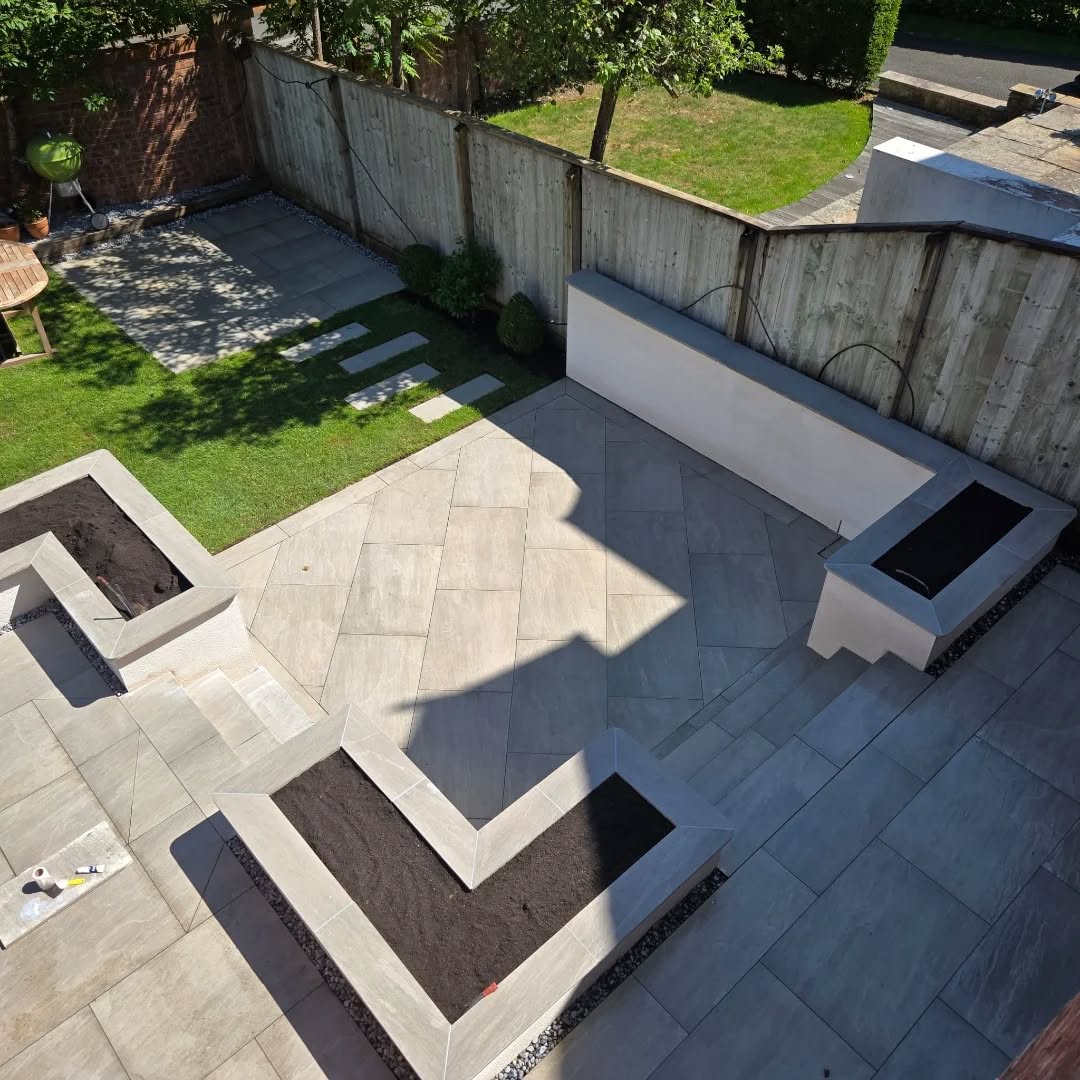
A garden that becomes wet after heavy rain is not unusual. The warning signs begin when puddles remain for days, the lawn constantly feels soft underfoot or muddy areas return every time the weather changes.
Waterlogging can prevent you from using the garden, damage lawns and make it difficult for plants to thrive. Over time, persistent moisture may also contribute to slippery paving, unstable surfaces and problems around fencing or garden structures.
Waterlogged gardens are a common landscaping challenge across Manchester. Frequent wet weather can expose issues with compacted ground, heavy soil, incorrect levels and inadequate drainage. In urban areas, extensive paving and development can make it even harder for rainfall to soak naturally into the ground.
The right solution begins with understanding why the water is collecting.
How Can I Tell If My Garden Is Waterlogged?
The most obvious sign is standing water that remains long after the rain has stopped. However, drainage problems are not always as dramatic as visible flooding.
Your lawn may feel spongy when you walk across it. Grass can become thin, yellow or covered with moss. Plants may struggle despite receiving plenty of water, and the soil may develop an unpleasant smell.
You might also notice water collecting in the same part of the garden, mud being carried into the house or paving that has started to move.
These symptoms suggest that water is entering the ground faster than it can drain away.
Why Do Manchester Gardens Become Waterlogged?
There is rarely one explanation that applies to every property. In many gardens, several factors are working together.
The soil may drain slowly, while the layout also directs water towards a low section of lawn. A large patio may increase surface runoff, or building work may have left compacted material beneath the topsoil.
A professional assessment considers the complete garden, including its levels, soil, paving, neighbouring land and existing drainage.
Heavy Clay Soil
Clay soil holds water because its fine particles sit closely together. During prolonged rain, the limited spaces between those particles fill with water and the ground becomes saturated.
Once saturated, the soil cannot absorb rainfall quickly enough. Water then remains on the surface or gathers in the lowest parts of the garden.
Clay soil is not necessarily poor soil. It can retain nutrients and support a wide range of planting, but it needs to be managed correctly. Adding a thin layer of new soil to the surface will not resolve a serious underlying drainage problem.
Depending on the conditions, improvements may involve aeration, suitable organic matter, changes to the garden’s levels or a dedicated drainage system.
Compacted Ground Beneath the Lawn
Soil becomes compacted when repeated pressure removes the spaces that allow air and water to move through it.
Regular foot traffic can contribute to surface compaction, but more severe problems often result from construction work or heavy machinery. This is particularly common in new-build gardens, where a relatively thin covering of soil may sit over heavily compacted subsoil or leftover building material.
The lawn can look acceptable in dry weather but quickly become waterlogged when it rains.
Aeration can help with mild compaction close to the surface. If the deeper soil structure is badly affected, more extensive preparation may be required.
The Garden Slopes Towards a Low Point
Water naturally moves downhill. If the garden has a sunken lawn, uneven ground or a slope leading towards the house, rainwater will repeatedly follow that route.
In narrow terraced gardens, even a small difference in level can concentrate water in one area. Raised neighbouring gardens may also contribute runoff, especially when the ground is already saturated.
Correcting this problem may involve reshaping the ground, creating terraces or intercepting the water before it reaches the lowest point.
Levels need to be planned carefully so the water is not simply transferred to another part of the garden or onto a neighbouring property.
Too Much Hard Landscaping
Patios, paths and other hard surfaces are important parts of a practical garden, but they reduce the amount of exposed ground available to absorb rainfall.
When a large proportion of the garden is covered with impermeable materials, water moves across the surface instead of soaking into the soil. If the paving does not have a suitable fall or drainage system, runoff can be directed straight into the lawn.
This does not mean that paving should be avoided. A well-designed garden can combine attractive patios and paving with planted beds, lawns, gravel and appropriate drainage.
The important thing is to consider the whole garden rather than designing each surface separately.
Poorly Installed Patios and Paths
A patio should be installed with a subtle gradient that moves water towards a suitable drainage point. If the surface is completely flat, slopes towards the house or has sunk in places, puddles can form.
Water may then spill from the patio into the surrounding lawn or collect beside the property.
Blocked drainage channels can cause similar symptoms. Leaves, soil and moss can prevent water from entering or travelling through the system.
If paving has started to move, simply clearing a channel may not be enough. The foundations and levels may need to be assessed.
Water Is Flowing in from a Neighbouring Property
In closely built areas, water does not always originate within your own boundary. It may flow down from a higher garden, adjoining path, extension or paved area.
Changes made to a neighbouring garden can sometimes alter the direction or volume of surface runoff.
Understanding the route of the water is important. Installing drainage only in the wettest patch may fail if the incoming water has not been intercepted or managed correctly.
Damaged or Inadequate Drainage
Some gardens already contain drainage, but the system may no longer work as intended.
Pipes can become blocked with soil and roots. Channels may fill with debris, while older drainage may not have enough capacity for changes made to the garden.
Extensions, new patios and other alterations can all increase the amount of surface water entering the system.
A drainage system must also have a suitable destination for the water. A pipe that merely moves it into another saturated part of the garden will offer little improvement.
How Do You Fix a Waterlogged Garden?
The correct solution depends on the cause, severity and layout of the garden. There is no single drainage product that works everywhere.
For some gardens, improving the soil and reducing compaction may be enough. Others require changes to levels, underground drainage or a wider redesign.
The goal is to manage the water safely without creating another problem elsewhere.
Aerate and Improve the Soil
Aeration creates openings in compacted soil, allowing air, water and nutrients to move more freely.
This may help lawns with mild surface compaction. Appropriate organic matter can also improve the structure of heavy soil over time.
However, aeration has limits. It will not correct a garden that slopes in the wrong direction or resolve deeply compacted ground left after construction.
The soil should be assessed before large amounts of material are added. Using the wrong amendment or simply covering the problem can make drainage worse.
Install a French Drain or Land Drain
A French drain usually consists of a perforated pipe installed within a gravel-filled trench. It collects water from the surrounding ground and carries it towards a suitable discharge point.
Land drains can be useful in lawns, along the base of slopes or beside hard-landscaped areas. They may also intercept water arriving from higher ground.
Positioning is critical. The depth, gradient and destination of the pipe determine whether the system works effectively.
An underground drain should never be installed without first establishing where the collected water can safely go.
Create a Soakaway
A soakaway collects water and allows it to disperse gradually into the surrounding soil.
It can be an effective option where the ground has suitable infiltration and enough space is available. However, a soakaway may perform poorly in heavy clay or already saturated ground.
Its location also matters. It should not be positioned where retained water could affect buildings or neighbouring land.
Ground conditions should be tested before assuming that a soakaway is the best solution.
Correct the Garden’s Levels
If water is repeatedly collecting in a low area, regrading the garden may provide a more effective long-term result than treating the puddle itself.
This could involve adjusting the lawn, introducing gentle falls, creating level terraces or building retaining structures.
The new layout should move water away from the property while maintaining comfortable access through the garden.
Correct levels can also improve the appearance of the space, making patios, lawns and planted areas feel more connected.
Add Drainage Channels
Linear channels can collect water from patios and paths before it reaches the house or lawn.
They are commonly installed near doors, along the edge of paving or across a route where surface water naturally travels.
The channel needs to sit at the correct level and connect to an appropriate outlet. It should also remain accessible so leaves and debris can be removed.
Installing a visible channel without planning the complete drainage route is unlikely to provide a lasting solution.
Introduce More Permeable Areas
Planting beds, lawns, gravel and other permeable features help slow rainfall and allow more water to soak into the ground.
In heavily paved gardens, even a modest increase in planted space can reduce the amount of surface runoff. However, the location and soil conditions still need to be considered.
A border cannot absorb unlimited water, particularly when the soil is already saturated. Permeable areas work best as part of a wider drainage and landscaping plan.
Build Raised Beds
Raised beds can create better growing conditions for plants that struggle in wet soil.
They lift the root zone above the saturated ground and allow the soil mix to be selected for the intended planting. Raised beds can also introduce structure, seating and changes in height to a flat garden.
They do not remove water from the wider space, so they should support rather than replace a proper drainage solution.
Choose Plants Suited to Damp Conditions
Some parts of a garden may always retain more moisture than others. Choosing plants that naturally tolerate damp soil can turn these areas into attractive features.
Moisture-tolerant trees, shrubs, grasses and perennials can bring colour and movement to parts of the garden where conventional planting struggles.
Plants will not solve flooding that threatens the property or makes the garden unusable. However, the right planting can complement a drainage strategy and help the garden respond more naturally to rainfall.
Can Landscaping Make Drainage Problems Worse?
Yes. Poorly planned landscaping can reduce natural drainage, trap water or direct it towards the house.
Common mistakes include raising the ground too close to the property, installing paving without suitable falls and covering most of the garden with impermeable surfaces.
Drainage should be considered at the design stage rather than added after the work is complete. Foundations, levels, materials and planted areas all affect how water moves through the finished garden.
This is why experienced landscapers look beneath the surface before focusing on the final appearance.
When Should You Speak to a Landscaper?
It is worth seeking professional advice when water remains for several days, repeatedly collects beside the house or prevents you from using a large part of the garden.
You should also arrange an assessment if paving is sinking, retaining structures are moving or the problem appeared after construction or landscaping work.
A professional landscaper can investigate the likely cause and determine whether the solution involves soil improvement, drainage, changes to levels or a more complete garden transformation.
Stop Letting a Waterlogged Garden Limit Your Home
A wet and muddy garden can feel like wasted space, but the problem can often be resolved with the right planning. Once the soil, levels and movement of water are properly understood, the garden can be redesigned to remain practical and attractive throughout the seasons.
The Manchester Landscaping Company creates bespoke gardens, patios and outdoor spaces across Manchester and the surrounding areas. We can assess the drainage challenges affecting your property and develop a landscaping solution designed around the garden, the ground conditions and the way you want to use the space.
Explore our recent landscaping projects, then contact The Manchester Landscaping Company or call 0161 222 4465 to discuss your garden. Let’s turn that wet, difficult space into a garden you can enjoy again.
Ready to Fix Your Waterlogged Garden?
You do not have to accept a muddy lawn, standing water or an outdoor space that becomes unusable whenever it rains. The right drainage and landscaping solution can transform your garden into a practical, attractive space that works throughout the year.
The Manchester Landscaping Company designs and builds bespoke gardens across Manchester and the surrounding areas. We will assess the soil, levels and movement of water before recommending a solution designed around your property.
Contact The Manchester Landscaping Company today or call 0161 222 4465 to arrange a consultation and take the first step towards a drier, more enjoyable garden.