Driveways Manchester: The Best Driveway Options for Your Home

Driveways Manchester: The Best Driveway Options for Your Home

A new driveway can completely change the front of your home.

It improves kerb appeal, creates a better first impression, and gives you a cleaner, more practical space for everyday use. A well-built driveway can also add value to your property and make the whole front garden feel more finished.

If you are searching for driveways in Manchester, it helps to understand the different options before making a decision. Some homeowners want the most affordable solution. Others want a driveway that looks premium and lasts for years. The best choice depends on your budget, the style of your home, and the finish you want.

At Manchester Landscaping Company, we install high-quality driveways in Manchester using a range of materials to suit different homes, tastes, and budgets.

Block Paving Driveways in Manchester

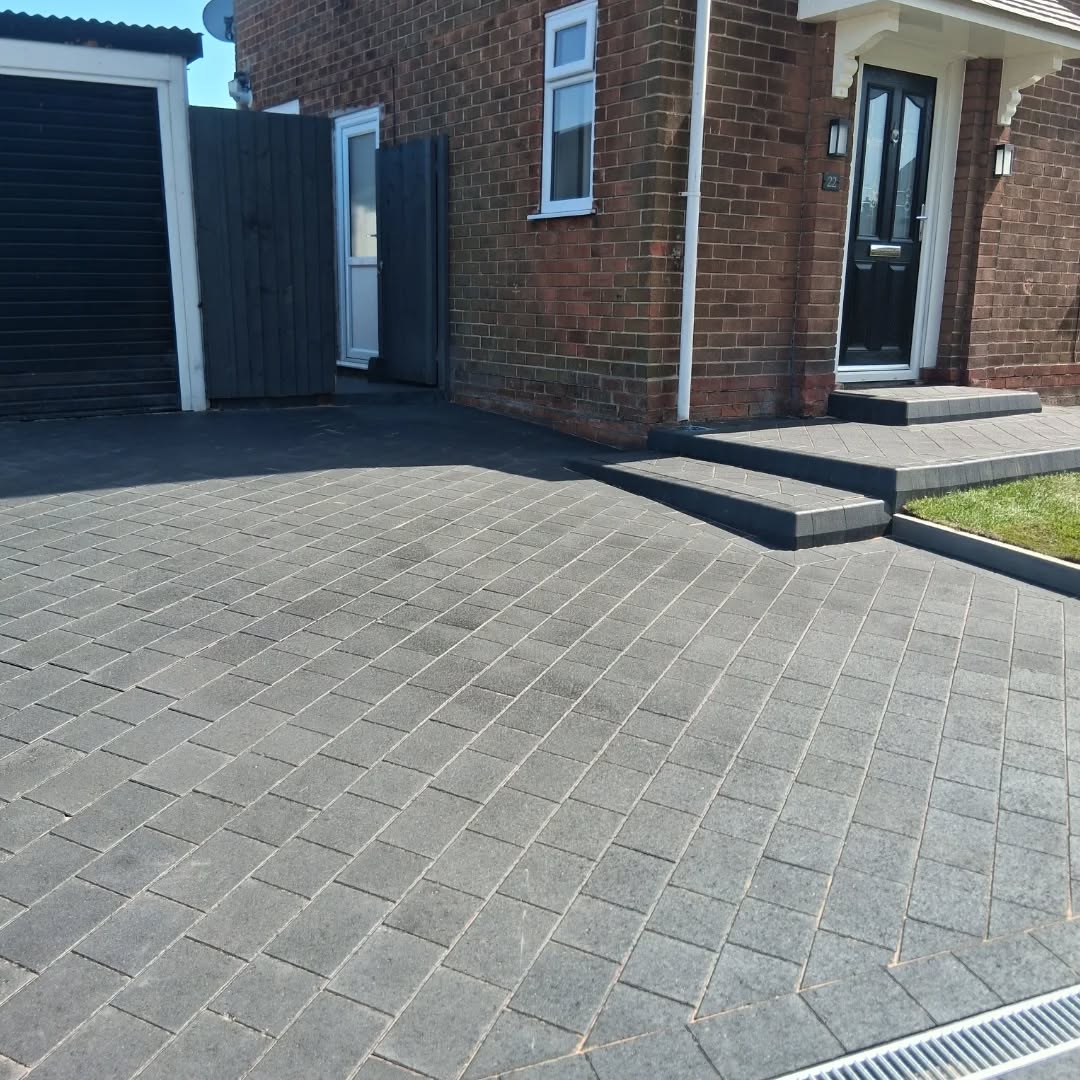
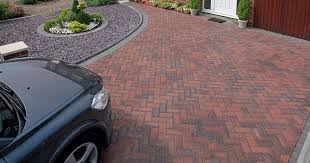
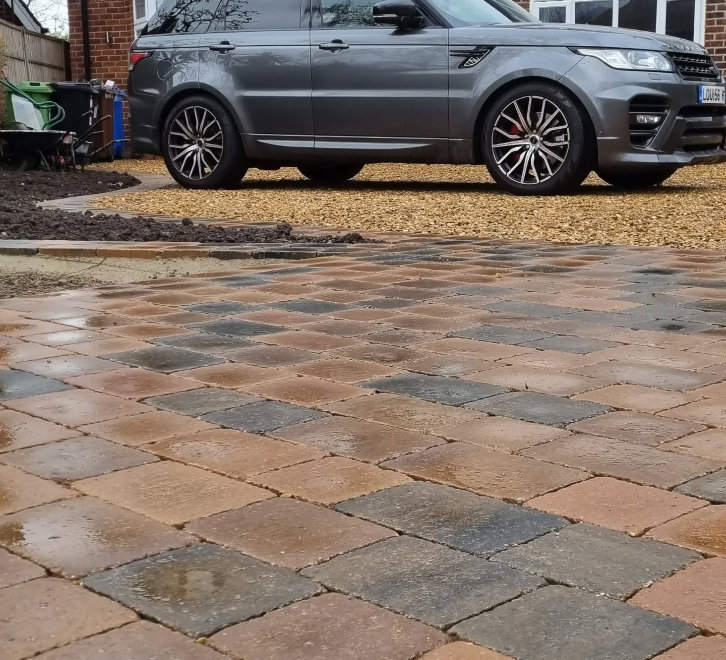
Block paving driveways remain one of the most popular choices in Manchester. They offer a smart finish and work well on both traditional and modern homes.

Many homeowners choose block paving because it gives them more freedom with the final design. You can choose from different colours, patterns, and borders to create a driveway that suits your property. It adds character and can make the front of a home look far more polished.

Block paving is practical too. If one section gets damaged, you can often lift and replace individual blocks. That makes it a strong long-term option for many homeowners.

Resin Driveways Manchester

Resin driveways are a great choice if you want a sleek and modern finish. They have become more popular across Manchester because they give homes a clean, premium look.

Resin-bound surfaces come in different colours and stone blends, so you can choose a finish that complements your property. Many homeowners also like resin because it is low maintenance and looks tidy all year round.

If you want a driveway that stands out for the right reasons, resin is a strong option.

Tarmac Driveways in Manchester

Tarmac driveways are a durable and cost-effective choice. They are ideal for homeowners who want a neat, practical surface that performs well in all weather.

Tarmac may not offer the same decorative look as resin or block paving, but it still looks smart when installed properly. You can also improve the overall appearance with block edging or kerb details.

If you want a driveway that offers value, durability, and a clean finish, tarmac is well worth considering.

Decorative Aggregate Chips Driveways

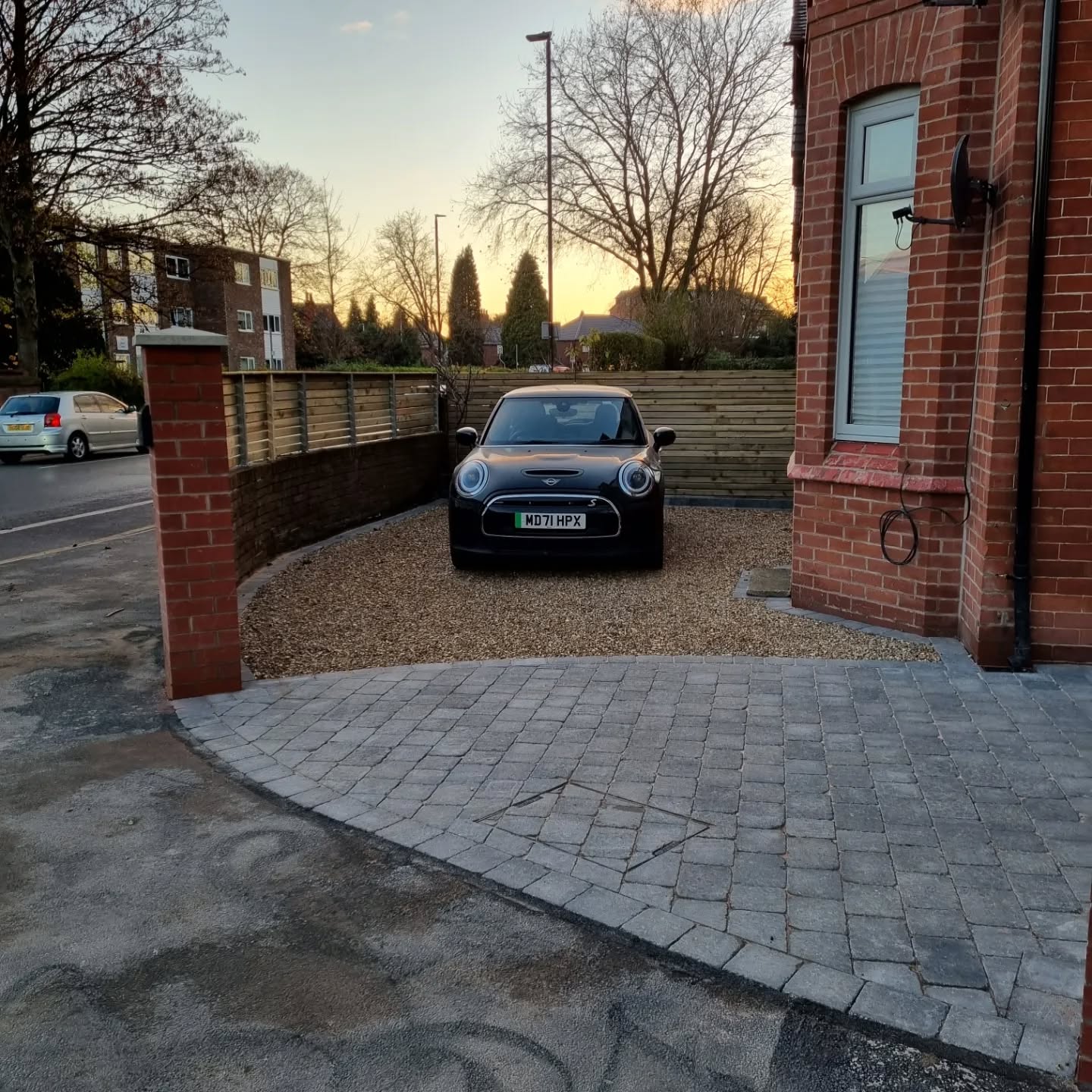
For homeowners working to a tighter budget, decorative aggregate chips are often the cheapest driveway option. They can still create a neat and attractive finish, especially on larger driveways or more traditional properties.

This option works well when cost matters most. It gives a natural look and can improve the front of a home without the higher price of more specialist materials.

Stone chips do not give the same solid finish as block paving, resin, or tarmac. Even so, they can still be a smart choice for the right property.

Porcelain Driveways Manchester

At the premium end of the market, porcelain driveways offer a more specialist and luxury finish. They suit homeowners who want something bespoke and are prepared to invest more for a standout result.

Porcelain creates a sharp, modern appearance and can completely transform the front of a property. It is a more expensive option, but the finished look can be exceptional.

For high-end homes in Manchester, porcelain can create real wow factor.

Which Driveway Is Best for Your Manchester Home?

The best driveway depends on what matters most to you.

If you want design flexibility, block paving is a great all-round choice. If you prefer a sleek and modern finish, resin may suit you better. Tarmac gives you durability and value. Decorative chips can help if budget is the main factor. Porcelain is ideal if you want a more luxury finish.

At Manchester Landscaping Company, we help homeowners choose the right surface and install driveways that look great and last.

If you are looking for trusted driveway installers in Manchester, get in touch with our team today.
Artificial Grass vs Natural Lawn in Manchester

Artificial Grass vs Natural Lawn in Manchester? What will you choose

We build gardens for real life, not just Instagram. And if you asked most landscapers what they’d choose, we’d usually say a proper natural lawn. A healthy, lush grass lawn looks premium, feels better underfoot, and gives a garden that warm, “finished” feel you just can’t fake. That said, Manchester weather, busy routines, kids, and dogs can make lawn care a chore, so we understand why artificial grass in Manchester is on so many wish lists.

Natural Lawn: The Premium Look

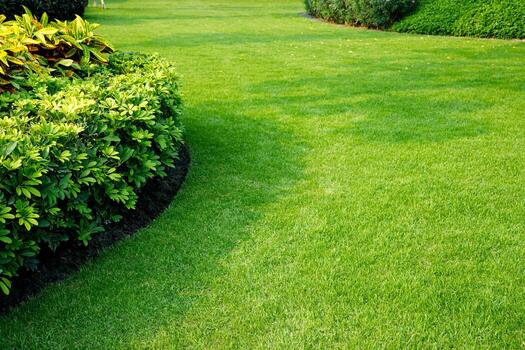
If you want the most authentic result, real turf (or a seeded lawn done properly) is hard to beat. When the groundwork is right, natural lawns give you a softer feel, a more natural look year-round, better drainage, and proper kerb appeal for Manchester homes. Most “bad lawns” come from poor preparation, uneven levels, and thin soil.

Artificial Grass: The Practical Option

Artificial grass can be a great solution when your garden gets hammered daily or you’re fed up fighting mud and patchy grass. It’s popular for busy families, pet owners who want a tidy garden through winter, small gardens where wear shows fast, and shaded spots where natural grass won’t thrive. The key is quality and correct installation, otherwise you can end up with sinking areas, lifting edges, and drainage issues.

Our Advice

If you love the idea of a truly lush lawn and don’t mind basic upkeep, natural turf is usually the best-looking long-term choice. If your priority is a tidy garden with less weekly work, artificial grass can be a smart option. We’ll always recommend what suits your lifestyle and your garden layout, not what’s easiest to sell.

artificial grass vs natural lawn Manchester – it’s your choice! we have had our say 😉

Contact us for a free quotation.

Visualise Your Dream Garden Before We Build

Visualise Your Dream Garden Before We Build

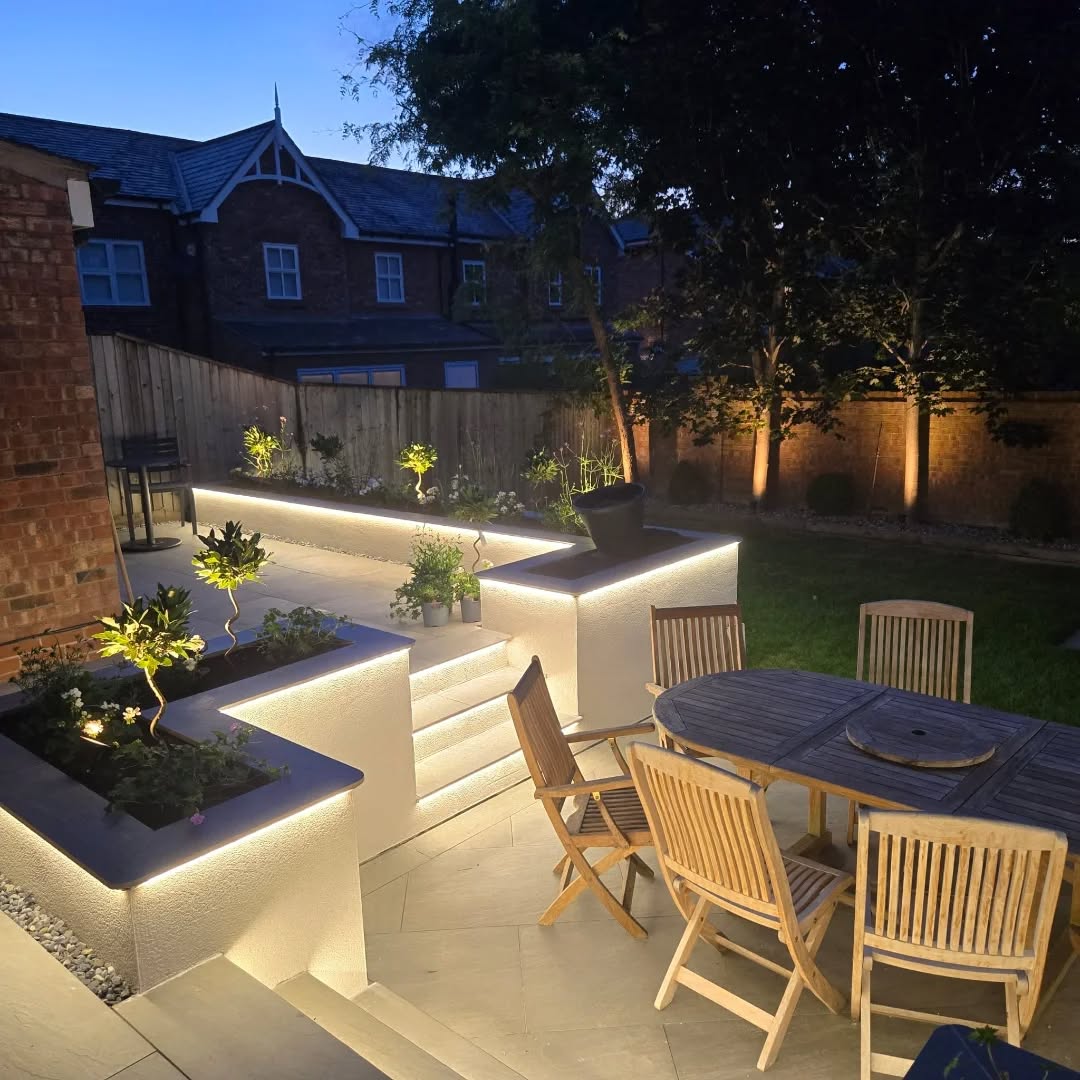
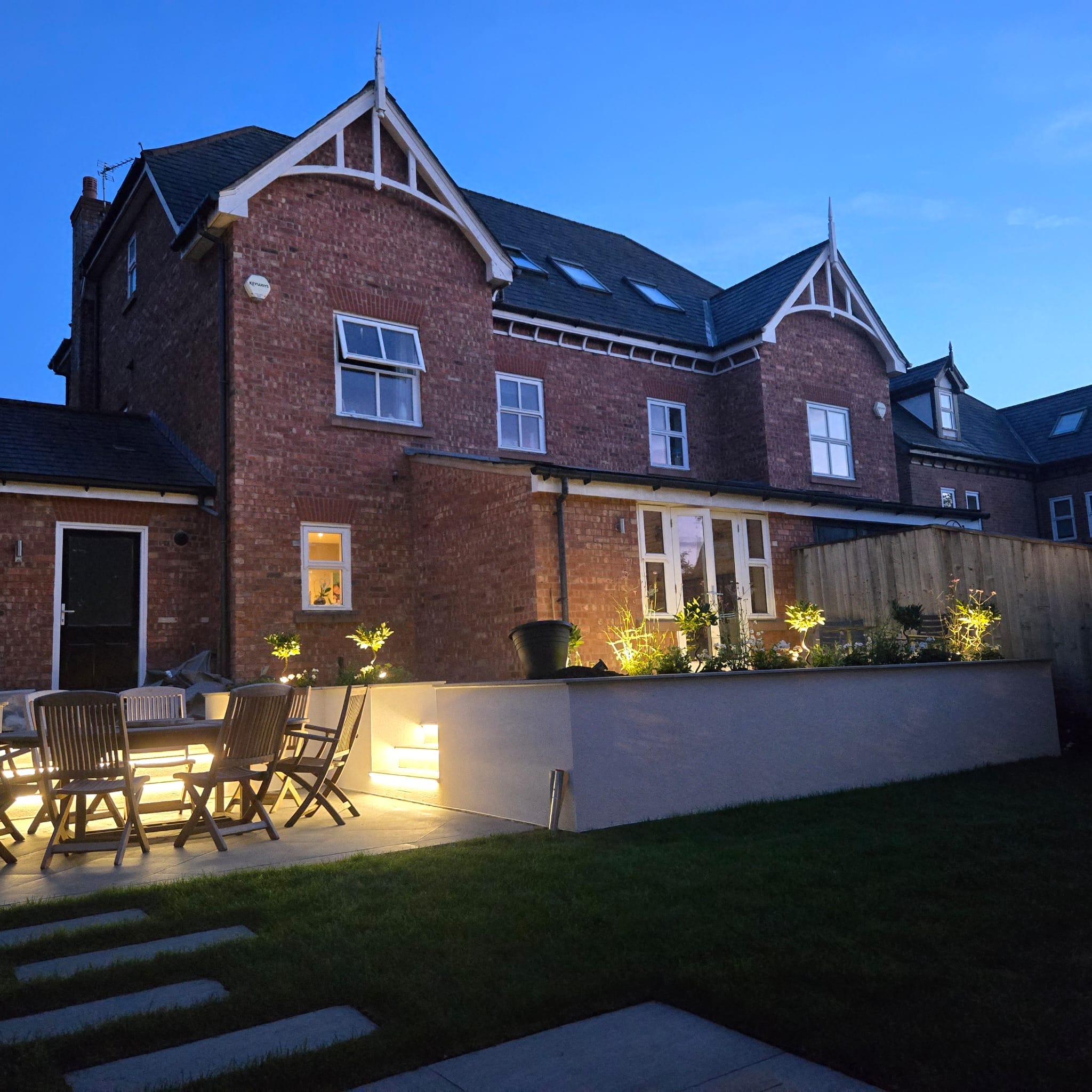
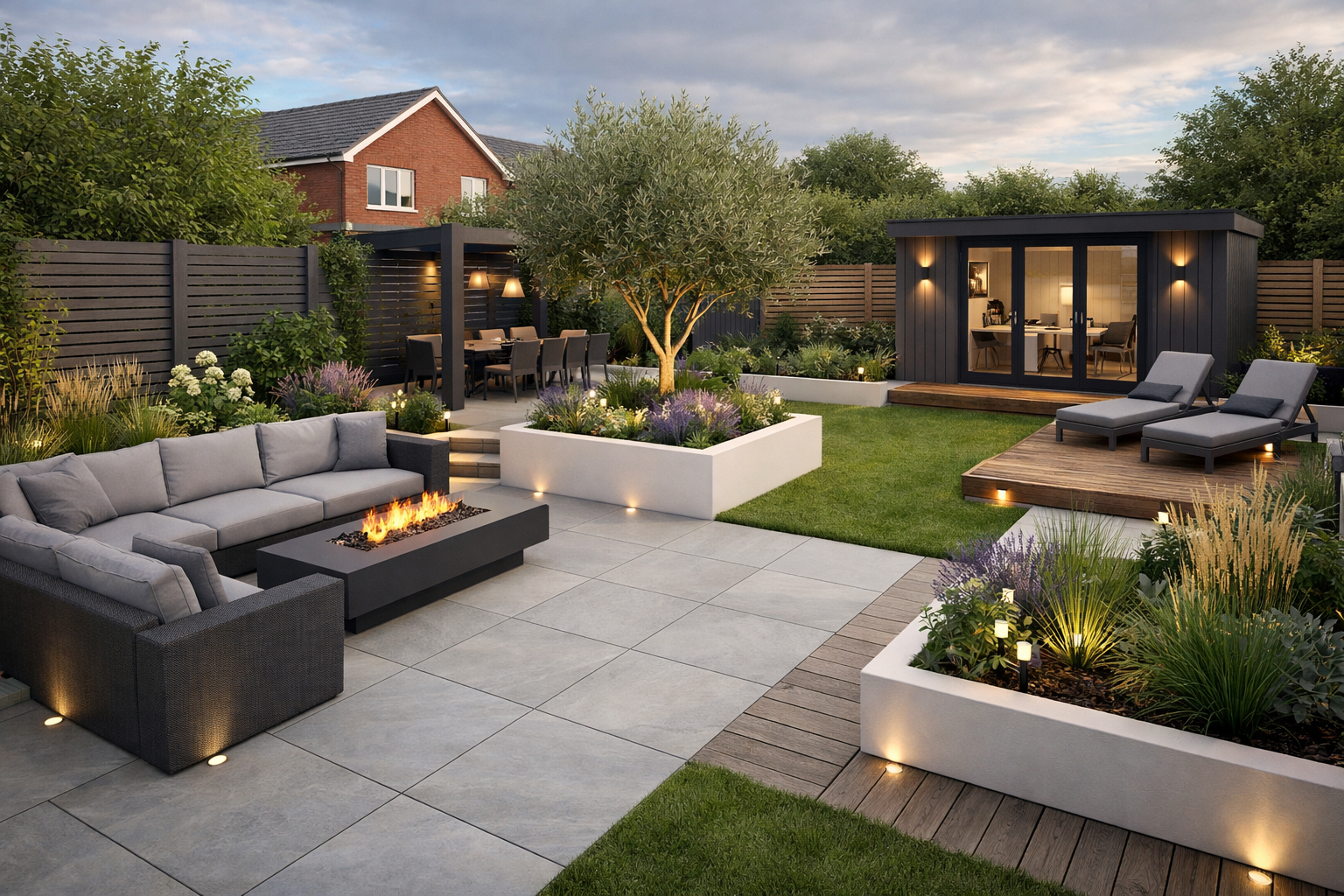
Garden design is one of the smartest ways to plan a high-end outdoor space in Manchester. Before a single slab goes down, a professional garden design lets you see the finished look, understand the layout, and make confident decisions on materials, levels, and planting. If you are investing in a contemporary garden makeover, a proper garden design is also a brilliant keepsake to look back on for years.

Why Garden Design Matters Before Landscaping Work Starts

A modern garden design helps you avoid costly changes during the build. You can explore ideas for zoning, seating areas, planting beds, lighting, and clean lines that suit modern landscaping. It also helps you choose the right finishes, such as porcelain paving, composite decking, raised planters, and neat edging, all popular choices for modern gardens in Manchester. We can build even the most bespoke garden and one that suits you needs and that of your family.

Our Garden Design Process in Manchester

Firstly we start with a site visit at your home in Manchester or Greater Manchester. We will walk the garden with you, discuss what you want the space to feel like, and talk through practical details such as access, drainage, and levels. We take photos and videos, then head away to create your tailored garden design.

You will receive a clear design that shows the layout and key features, helping you visualise the end result before the landscaping begins. Edits are included, so we can refine the design until it feels right, before we put anything in the ground.

Add another room to your house

Adding a landscaped garden to your home really does feel like bringing the outdoors in. a space where you want to visit so often will literally transform your house, your lifestyle and the way you see the garden – We hear stories of people barbecuing in the rain then taking it indoors or eating out with a sheltered pergola!

Ready to Plan a Modern Garden Makeover?

If you are searching for modern garden design in Manchester, our garden design service is the perfect first step towards a stylish, low-maintenance garden that adds value and improves how you live at home.

Contact us here – We would love to assist you in creating your dream garden

Driveway Installation Timeline: From Start to Finish

A new driveway is a significant investment, not just in how a property looks, but in how it functions every day. One of the most common questions homeowners ask before committing to work is how long the process will take and what actually happens at each stage.

From experience delivering driveway projects across Greater Manchester, delays and frustrations usually arise when expectations are unclear. A well-managed driveway installation follows a clear sequence, with each stage building on the last. Understanding this timeline helps homeowners plan realistically and appreciate why certain steps cannot be rushed.

Initial Assessment and Site Survey

Every successful driveway installation begins before any machinery arrives on site. The initial survey is where problems are prevented rather than fixed later.

At this stage, levels are measured, drainage routes are assessed, and ground conditions are evaluated. The existing driveway or garden area is examined for signs of poor soil, standing water, or previous structural issues. Access for machinery and waste removal is also considered, particularly important for terraced or tightly spaced properties.

This assessment informs the design, material choice, and construction method. Skipping or rushing this stage often leads to delays once work begins.

Design Finalisation and Scheduling

Once the site is understood, the driveway design is finalised. This includes layout, materials, edging details, drainage solutions, and how the driveway connects to the property and pavement.

At this point, a realistic programme of works is agreed. Weather conditions, curing times, and access requirements are factored into the schedule. A professional installer will always allow contingency for poor weather, as certain stages cannot proceed safely in heavy rain or freezing conditions.

Clear scheduling at this stage sets expectations and keeps the project organised.

Excavation and Removal of Existing Surfaces

The first physical stage of installation is excavation. Existing surfaces are broken out and removed, along with unsuitable ground beneath. The depth of excavation depends on the driveway type, soil conditions, and expected load.

This stage is noisy and disruptive, but it is critical. Insufficient excavation is one of the most common causes of driveway failure. Removing waste material properly also ensures the new driveway is built on stable ground rather than compromised layers.

For most residential driveways, this stage typically takes one to two days.

Sub-Base Installation and Compaction

Once excavation is complete, the sub-base is installed. This is the structural foundation of the driveway and determines how well it performs over time.

A high-quality sub-base is laid in layers and compacted thoroughly. This process prevents future movement, sinking, and cracking. In areas with poor drainage or clay soil, additional measures may be introduced to manage water effectively.

Although this stage is not visible once the driveway is complete, it is the most important part of the entire timeline. Rushing here almost always leads to long-term problems.

Drainage and Edging Installation

With the sub-base in place, drainage and edging are installed. Drainage ensures surface water is directed away from buildings and does not pool on the driveway.

Edging provides structural restraint, preventing materials from spreading or shifting under use. It also defines the driveway visually and creates clean transitions to paths, borders, or lawns.

Completing these elements before the surface layer ensures accuracy and durability.

Surface Installation

The surface layer is where the driveway begins to take shape visually. The method and timing depend on the chosen material.

Block paving is laid carefully, cut precisely, and compacted once installed. Resin-bound systems require controlled conditions and careful mixing. Pattern imprinted concrete involves pouring, texturing, and curing over a set timeframe.

This stage can take one to three days depending on complexity, weather, and material choice. Attention to detail here affects both appearance and longevity.

Curing, Sealing, and Finishing Touches

Most driveway surfaces require a curing period before they can be used. This allows materials to set properly and achieve full strength.

Some surfaces also require sealing, which enhances durability and protects against staining and weathering. Final checks are carried out to ensure levels, drainage, and edges perform as intended.

Homeowners are advised on aftercare, including when vehicles can return to the driveway and how to maintain the surface long term.

A Professional Driveway Installation in Manchester

The Manchester Landscaping plan the projects carefully from the initial survey through to completion. Ground conditions, drainage requirements, and material performance in Manchester’s climate are considered at every stage. This approach ensures timelines are realistic and outcomes are consistent.

Clear communication throughout the process helps homeowners understand what is happening and why, reducing stress and uncertainty.

Why the Process Matters

A driveway installation is only as good as the process behind it. Each stage, from excavation to finishing, plays a specific role in the driveway’s long-term performance.

Understanding the timeline helps homeowners appreciate why quality work takes time and why shortcuts rarely pay off. With proper planning, skilled installation, and realistic expectations, a new driveway can be delivered efficiently and built to last.

If you are considering a new driveway, working with an experienced professional ensures the project is managed properly from start to finish, with no critical steps overlooked.

5 Reasons to Hire a Professional Landscaping Company

Landscaping is one of the few home improvements that must work on several levels at once. It needs to look right, function properly, cope with weather, and improve with age rather than decline. When any one of these elements is overlooked, even the most attractive garden can quickly become frustrating to live with.

From decades of combined experience across residential projects, one pattern is consistent. Gardens designed and built professionally perform better, last longer, and cost less to maintain over time. For homeowners considering landscaping in Manchester, understanding why professional involvement matters can prevent expensive mistakes and disappointing results.

1. Professional Landscaping Starts With Strategy

Many landscaping problems begin with premature decisions. Homeowners often choose paving, turf, or planting before thinking about how the garden should actually work.

A professional landscaping company begins with strategy. This means understanding how the space will be used across seasons, how people move through it, and how it connects to the house. Storage, access, seating, and privacy are all considered before design details are finalised.

This strategic approach prevents the common issue of gardens that look good on completion but feel awkward or impractical in daily use. In landscaping in Manchester, where gardens are often compact or irregularly shaped, strategic planning makes the difference between a space that merely exists and one that genuinely works.

2. Ground Conditions Are Assessed Properly

Landscaping is as much about what lies beneath the surface as what is visible. Inadequate ground preparation leads to problems that no amount of surface correction can fix.

Professional landscapers understand soil types, drainage behaviour, and load requirements. Manchester properties frequently sit on clay-heavy or disturbed ground, both of which require specific construction methods to remain stable.

By assessing ground conditions early, professionals design appropriate foundations, drainage routes, and levels. This prevents issues such as pooling water, movement in paving, and declining lawn quality. These problems rarely appear immediately but often emerge once the garden has been in use for a year or two.

3. Design is Made With Longevity in Mind

A well-designed garden should improve with time, not deteriorate. Professional landscaping focuses on longevity rather than instant impact.

Planting is selected based on growth habits, light levels, and maintenance expectations. Hard landscaping materials are chosen for durability and weather resistance rather than short-term appearance. Proportions are carefully considered so that the garden remains balanced as plants mature.

This long-term perspective is especially important in landscaping in Manchester, where wet winters and fluctuating temperatures place additional strain on poorly chosen materials and planting schemes.

4. Professional Execution Reduces Costly Errors

Many homeowners underestimate how quickly small mistakes escalate during landscaping projects. Incorrect levels, rushed sequencing, or poorly installed drainage can require extensive rework once problems appear.

Professional landscapers follow a structured process. Excavation, construction, and finishing are completed in the correct order. Materials are installed according to specification rather than convenience. This reduces waste and avoids remedial work later.

Although professional landscaping may appear more expensive initially, it often proves more economical over time by avoiding repeated fixes, replacements, and maintenance issues.

5. Accountability and Aftercare

Landscaping is not complete the moment tools leave the site. Gardens settle, plants establish, and surfaces bed in. Professional companies understand this process and provide guidance or support when adjustments are needed.

Accountability matters. A professional landscaping company stands behind its work, ensuring issues are addressed properly rather than left unresolved. This is particularly important for larger or more complex projects where multiple elements must perform together.

For homeowners investing in landscaping in Manchester, this reassurance provides confidence that the garden will continue to function as intended.

A Measured, Professional Approach to Landscaping in Manchester

At The Manchester Landscaping, landscaping is treated as a construction and design discipline rather than a decorative exercise.

Each project begins with careful site assessment, clear design logic, and realistic planning. Materials and planting are selected based on performance in Manchester’s climate, not passing trends. Construction is carried out methodically to ensure structural integrity and long-term reliability.

This approach results in gardens that remain usable, balanced, and visually coherent long after completion.

If you are considering landscaping in Manchester, working with a professional ensures your garden is built to last, designed to be used, and capable of adapting as your needs change. Contact us today for a free site visitation!

Is Pattern Imprinted Concrete Right for Your Driveway or Patio?

Pattern imprinted concrete has become a familiar feature in driveways, patios, and pathways across the UK. It is often chosen for its clean appearance and solid feel underfoot, but its real value lies in how it performs over time when properly designed and installed.

As a landscaping professional, I have seen pattern imprinted concrete succeed brilliantly in the right setting and fail prematurely when poorly specified or rushed through installation. Understanding what it is, how it works, and where it performs best is essential before deciding whether it is the right solution for your home.

What Is Pattern Imprinted Concrete

Pattern imprinted concrete is a continuous concrete surface that is poured, coloured, and textured while still wet. Specially designed moulds are pressed into the surface to replicate the appearance of materials such as block paving, natural stone, slate, or cobbles.

Once the concrete has cured, the surface is sealed to protect it from moisture, staining, and wear. The finished result is a single, solid slab with a decorative surface rather than individual units.

This construction method is what sets pattern imprinted concrete apart from traditional paving systems and explains both its strengths and its limitations.

How Pattern Imprinted Concrete Is Installed

Installation begins with proper ground preparation. The existing ground is excavated and a stable sub-base is installed and compacted. This stage is critical. Most failures occur because this step is rushed or underbuilt.

Concrete is then poured to a consistent depth, levelled carefully, and coloured using a surface hardener or integral pigment. Once the concrete reaches the correct curing stage, pattern mats are pressed into the surface to create texture and joint lines.

After curing, the surface is thoroughly cleaned and sealed. The sealant enhances colour, adds surface protection, and reduces water penetration.

Each stage depends on timing, weather conditions, and experience. This is why pattern imprinted concrete is not a material that forgives poor workmanship.

The Structural Benefits of Pattern Imprinted Concrete

One of the main advantages of pattern imprinted concrete is its strength. Because it forms a single slab, there are no individual joints that can loosen or shift under load.

This makes it particularly suitable for driveways that experience regular vehicle traffic. When installed correctly, the surface distributes weight evenly and resists movement caused by freeze-thaw cycles, which are common in the UK climate.

The absence of joints also reduces weed growth, a common frustration with block paving and gravel surfaces.

Low Maintenance in Practical Terms

Pattern imprinted concrete is often described as low maintenance, but this needs to be understood properly.

There are no joints to re-sand and no loose units to realign. Routine maintenance typically involves occasional cleaning and resealing every few years to maintain colour and surface protection.

However, neglecting resealing can shorten the lifespan of the surface. UV exposure, moisture, and traffic gradually wear down the sealant. Regular care is what keeps pattern imprinted concrete looking consistent and prevents surface deterioration.

Visual Consistency and Design Control

One of the reasons homeowners choose pattern imprinted concrete is the level of visual control it offers. Colour, texture, and layout are decided before installation, resulting in a uniform finish that does not shift or change over time.

This consistency works well in contemporary landscapes and on properties where clean lines and uninterrupted surfaces are preferred. It can also complement traditional homes when patterns and colours are chosen with restraint.

The key is subtlety. Overly bold patterns or strong colours tend to date quickly, whereas neutral tones and simple textures age far more gracefully.

Drainage and Surface Water Considerations

Pattern imprinted concrete is an impermeable surface. This means water does not pass through it naturally like permeable paving or gravel systems.

Proper drainage design is therefore essential. Falls must be built into the surface to direct water away from buildings and towards suitable drainage points. In some cases, additional drainage channels are required to comply with regulations and prevent surface water issues.

This is an area where professional planning is essential, particularly for driveways and front gardens.

Where Pattern Imprinted Concrete Works Best

Pattern imprinted concrete performs best in areas where stability and uniformity are priorities.

Driveways, patios, and access paths benefit from its solid construction and clean finish. It is particularly effective where weed control, load-bearing capacity, and ease of cleaning are important.

It is less suitable for areas that may require future access beneath the surface, as repairs involve cutting and reinstating concrete rather than lifting individual units.

Understanding these limitations is just as important as appreciating the benefits.

The Manchester Landscaping Company Approach

At The Manchester Landscaping, pattern imprinted concrete is approached as an engineered surface rather than a decorative shortcut.

Every project begins with ground assessment, drainage planning, and honest discussion about suitability. If a site or usage pattern is better served by another material, that advice is given upfront.

When pattern imprinted concrete is the right choice, attention is placed on preparation, reinforcement, curing times, and sealing schedules. These details determine whether the surface lasts decades or develops problems prematurely.

If you are considering pattern imprinted concrete for your driveway or garden, expert advice at the planning stage will ensure the finished result looks right, drains correctly, and stands the test of time. Contact us today for a site visit!

Choosing the Best Driveway & Landscaping Company in Manchester

Choosing the Best Driveway & Landscaping Company in Manchester (And What to Watch Out For)

Choosing a driveway and landscaping company isn’t just about getting a “nice finish”. Done properly, your driveway and garden can add kerb appeal, make your home more practical, improve drainage, reduce maintenance, and increase the value of the property.

Done badly? You’ll be dealing with sinking paving, puddles, cracking edges, messy pointing, poor drainage, weeds coming through within months, and the awkward reality of having to pay twice to get it fixed.

If you’re looking for a driveway company in Manchester or a landscaping company in Manchester, here’s a no-nonsense checklist to help you choose the right team (and avoid the cowboys).

Why the right contractor matters (especially in Manchester)

Manchester weather is a proper test for outdoor work. Constant rain, freeze/thaw cycles, and heavy use can highlight shortcuts fast.

A quality contractor will:

  • Build strong, well-compacted sub-bases

  • Factor in water run-off and drainage

  • Use the right materials for the job (not the cheapest)

  • Finish edges and levels properly so everything lasts

A poor contractor will focus on the surface only — which looks great for a few weeks, then fails underneath.

What a good driveway & landscaping company should do

Whether you’re getting a new driveway installation in Manchester, a patio, turf, or a full garden transformation, a reliable company should:

  • Survey properly (levels, access, drainage, ground conditions)

  • Provide a clear written quote with inclusions/exclusions

  • Explain the process step-by-step

  • Recommend materials that suit your goals (durability, style, maintenance)

  • Offer realistic timeframes (not “we’ll be done in 2 days” for a full build)

  • Show a portfolio of local work and reviews

  • Be comfortable answering questions (not rushing you to decide)

10 questions to ask before you hire anyone

Use these questions on every quote call. A good contractor will answer confidently.

  1. What sub-base depth are you installing?
    For driveways, the base matters more than the blocks/resin on top.

  2. How will you deal with drainage and water run-off?
    This is critical for driveways and patios, especially on slopes.

  3. Are you excavating and removing spoil, or building up on top?
    If they’re not digging out properly, you’ll often get movement and cracking.

  4. What’s included in the price (exactly)?
    Ask what’s excluded too — waste removal, edging, steps, drainage channels, disposal, etc.

  5. Do you use edging restraints?
    Edges stop movement and spreading. Weak edges = future failure.

  6. What materials are you using (brand/type)?
    Block paving, resin, sandstone, porcelain… quality varies massively.

  7. Who is doing the work?
    Is it their own team or subbies? Either can be fine — but you want accountability.

  8. How long will it take and what are the working hours?
    You want a plan, not “we’ll see”.

  9. What aftercare do you recommend?
    Sealing, cleaning, weed prevention, settling time.

  10. What guarantee/warranty do you provide in writing?
    Not a vague “don’t worry mate”.

Red flags to watch out for (Manchester driveway & landscaping scams)

If you see any of these, walk away.

  • Cash-only or “cash discount” pressure

  • No written quote or they won’t detail what’s included

  • Knocking your door saying they’re “working nearby”

  • Vague answers about sub-base depth, drainage, or materials

  • Unrealistic timelines for big projects

  • No local portfolio or only random screenshots

  • You’re pushed to decide on the spot

  • They slag off every other contractor (usually insecurity)

A professional company earns trust by being clear, not pushy.

How to compare quotes properly (it’s not just the bottom line)

Two quotes can be £3,000 apart and both sound the same — until you compare what’s actually included.

When comparing quotes, check:

  • Excavation depth and waste removal

  • Sub-base materials and thickness

  • Drainage solution (if required)

  • Edging, kerbs, and restraints

  • Finish quality (jointing, pointing, cuts, levels)

  • Materials (type, brand, thickness)

  • Timeline and payment terms

If you want it to last, you’re comparing build quality, not just price.

What the process should look like (a good sign you’re in safe hands)

A typical professional process for driveway or landscaping work:

  1. Site survey + design/chat (needs, style, budget, drainage)

  2. Written quote with clear scope and options

  3. Preparation (dig-out/excavation, waste removal)

  4. Sub-base installation (proper compaction in layers)

  5. Edging + levels set

  6. Surface install (block paving / resin / patio / turf etc.)

  7. Finishing (jointing, pointing, clean down)

  8. Handover + aftercare advice

If they don’t mention sub-base and drainage early — that’s a sign they’re surface-focused.

Local note: “Areas we cover”

We cover Driveway & Landscaping Projects in Manchester and Greater Manchester, including: Didsbury, Chorlton, Sale, Altrincham, Stretford, Stockport, Prestwich, Whitefield, Salford, Urmston, Worsley, Middleton and surrounding areas.

FAQs

How much does a new driveway cost in Manchester?

It depends on the size, access, ground conditions, drainage needs, and finish (block paving, resin, tarmac, etc.). A proper quote should follow a site visit so nothing is missed.

Is resin better than block paving?

Resin can look brilliant and be low maintenance, but it needs the right base and correct installation. Block paving is extremely durable and easy to repair if done properly. The “best” option depends on your priorities and budget.

Do I need drainage for my driveway?

Often yes — especially if you’re replacing a front garden or changing levels. A good contractor will assess run-off and advise the right solution.

How long should a driveway or patio last?

With the right sub-base, edging restraints, and quality materials, you should be looking at many years of solid use (not months).

How do I avoid being ripped off?

Get a written quote, compare scope not just price, ask about sub-base and drainage, check reviews/portfolio, and avoid pressure sales.

If you’re planning a new driveway, patio, or full garden transformation and want it done properly (no shortcuts), get in touch with The Manchester Landscaping Company.

Book a site visit and get a clear written quote — with options, timeframes, and honest advice.

Small Garden Design Ideas for Terraced Homes in Manchester

Designing a small garden in Manchester is less about squeezing in features and more about making deliberate, well-informed choices. Terraced homes dominate many of the city’s neighbourhoods, and their gardens often come with predictable challenges. Limited width, overlooked boundaries, poor drainage, and inconsistent light all influence what will succeed long term.

From years of hands-on experience working with terraced properties across Manchester, the most effective small gardens are those designed around function first. When the structure works, the planting, materials, and layout fall into place naturally. The goal is not to make the garden feel bigger than it is, but to make every square metre work harder and more intelligently.

Layout comes before planting

One of the most common mistakes homeowners make is focusing on planting before addressing layout. In a small garden in Manchester, circulation and proportion matter more than the number of plants.

A clear route through the garden, even if it is only a subtle change in paving direction, helps the space feel ordered and calm. Dividing the garden into two or three defined zones often works better than treating it as a single rectangle. A small seating area, a planting zone, and a practical access route create purpose without clutter.

When each area has a job, the garden feels intentional rather than cramped.

Vertical space is a design asset

In narrow terraced gardens, vertical surfaces are often underused. Fences and walls provide valuable opportunities to introduce greenery without sacrificing floor space.

Climbing plants, wall-trained shrubs, and slimline trellis systems soften boundaries and draw the eye upward. This helps reduce the sense of enclosure while increasing planting density. In a small garden in Manchester, vertical planting also improves privacy and can shelter the space from wind.

The key is restraint. A few well-chosen climbers with clear structure will always outperform a wall crowded with mismatched plants.

Planting with purpose and restraint

Planting in a small garden should always be deliberate. Every plant should earn its place, either through structure, seasonal interest, or practical benefit.

Evergreen shrubs provide year-round form and help anchor the design. Perennials add softness and seasonal change without excessive bulk. In shaded Manchester gardens, foliage texture often matters more than flowers, as reliable colour can be harder to maintain.

Grouping plants rather than scattering them creates visual calm and simplifies maintenance. This approach also allows plants to establish properly, which is essential in smaller spaces where competition for light and nutrients is higher.

The Manchester Landscaping Approach

At The Manchester Landscaping, small garden design is treated as a specialist discipline rather than a scaled-down version of larger projects. Terraced gardens require precision, restraint, and a deep understanding of how space is perceived.

If you are considering improving your terraced garden, a thoughtful, site-specific approach will always deliver better results than quick fixes.

A well-designed small garden is not about size. It is about how well the space works for the people who live with it every day.

Driveway Design Trends in 2026 for Manchester Homes

Driveways have quietly become one of the most influential parts of a home’s exterior. In Manchester especially, where property styles range from Victorian terraces to modern infill developments, the driveway often sets the tone for everything that follows. By 2026, homeowners are no longer asking what looks nice alone. They are asking what works, what lasts, and what genuinely improves the way their property functions day to day.

1. Permeable surfaces are becoming the default choice

One of the clearest driveway design trends in 2026 is the move towards fully permeable systems. This is not just driven by regulation, but by performance. Permeable driveways allow rainwater to pass through the surface and drain naturally into the ground below, reducing surface runoff and standing water.

In Manchester, where heavy downpours are common, this approach significantly reduces issues such as puddling, algae growth, and premature surface failure. Resin bound systems, permeable block paving, and reinforced gravel grids are leading the way. When correctly installed with the right sub-base, these surfaces remain stable, visually clean, and far more resilient than traditional impermeable alternatives.

2. Natural colour palettes are replacing stark contrasts

Another key trend shaping driveway design in 2026 is the move away from harsh colour contrasts. Bright whites, deep charcoals, and overly patterned finishes are being replaced with softer, more natural tones.

Greys with warm undertones, muted buffs, and stone-inspired blends sit more comfortably alongside brickwork, planting, and boundary walls. This creates a sense of cohesion between the driveway and the rest of the landscape. The driveway stops feeling like a separate feature and instead becomes part of a unified frontage.

This is particularly effective in Manchester’s older neighbourhoods, where subtlety often complements period architecture better than bold modern statements.

3. Minimalist layouts with clear edging

Design simplicity is another hallmark of the driveway design trends in 2026. Homeowners are favouring clean lines, uncluttered layouts, and clearly defined edges. Rather than complex patterns, interest is created through proportion, texture, and alignment with the building and garden.

Edging plays a critical role here. Crisp stone or concrete edging provides structure, protects the surface from movement, and creates a deliberate transition between driveway, planting, and pathways. This attention to detail is what elevates a driveway from functional to refined.

4. Sustainable construction beyond the surface

Sustainability in driveway design goes deeper than surface materials. One of the quieter driveway design trends in 2026 is improved construction methods beneath the surface.

Recycled aggregates, responsibly sourced stone, and longer-lasting sub-base systems are becoming standard among quality installers. These choices reduce environmental impact while improving structural integrity. A well-built driveway should not need major intervention for many years. That longevity is one of the most sustainable outcomes of all.

5. Blending driveways seamlessly with front gardens

In Manchester, front gardens are often modest in size, which makes integration crucial. Rather than replacing greenery with hardstanding, modern driveway design focuses on balance.

Planted borders, rain gardens, and softened edges help break up large paved areas. Low planting improves visual appeal while supporting drainage and biodiversity. This approach ensures the driveway enhances the property rather than dominating it.

The most successful driveway design trends in 2026 recognise that landscaping and hardscaping should work together, not compete.

Our Approach

At The Manchester Landscaping Company, driveway design begins with understanding the site rather than pushing a one-size-fits-all solution. Every property has different constraints, soil conditions, and usage requirements.

Our approach reflects the principles behind the driveway design trends in 2026. Practical layouts, appropriate materials, and proper ground preparation come first. Aesthetics follow naturally from sound construction and thoughtful design. This is why professionally designed driveways not only look better on completion but continue to perform reliably year after year.

If you are considering upgrading or redesigning your driveway, working with the Manchester Landscaping Company ensures the end result is both attractive and built to last.

Do I need planning permission for a new driveway in Manchester?

Do I Need Planning Permission for a New Driveway in Manchester?

If you’re thinking about installing a new driveway in Manchester—whether it’s block paving, resin, tarmac, gravel, or reinforced grass—there’s one question you should answer before you book the digger:

Do you need planning permission?

The good news: many driveways fall under permitted development and don’t need a full planning application. The bad news: people often get caught out by drainage rules, dropped kerbs, or living in a conservation area.

This guide breaks it down in plain English, so you can move forward confidently—and avoid costly “rip it out and do it again” situations.

(Quick note: this is general guidance, not legal advice. If you’re unsure, always check with Manchester City Council before starting.) (Manchester City Council)

When you usually DON’T need planning permission

In England, you typically won’t need planning permission for a new or replacement driveway at a house if the surface is designed so that rainwater soaks into the ground on your property rather than running into the street drains.

The Planning Portal guidance is clear: you don’t need planning permission if:

  • the driveway uses permeable (porous) surfacing (for any size driveway), or
  • rainwater is directed to a permeable area like a lawn or border to drain naturally. (Planning Portal)

Examples of driveway finishes that can be permeable (when installed correctly)

  • Gravel (often naturally permeable)
  • Permeable block paving systems
  • Porous asphalt
  • Resin-bound systems (not resin-bonded—different thing)
  • Reinforced grass / cellular grids

The key isn’t just what it looks like on top—it’s the full build-up (sub-base, bedding layers, and how it drains).

When planning permission IS likely in Manchester

You’re more likely to need planning permission if any of the following apply:

1) You’re laying an impermeable surface over more than 5m² (front garden rule)

If the area between the front of your house and the highway is covered by more than 5 square metres of a surface that doesn’t let water through (and the water can’t drain to a permeable area), you’ll usually need planning permission.

This is the big one that catches people out, specially with concrete, traditional tarmac, and some resin installs.

2) You can’t keep water on your property (drainage/SuDS issue)

If rainwater is going to run off your new driveway onto:

  • the public pavement
  • the highway
  • public drains

…you may need to redesign your drainage (soakaway, permeable sub-base, rain garden, etc.) or apply for permission.

There’s also government guidance on options for permeable surfacing and controlling run-off from driveways. (GOV.UK)

3) You need a new dropped kerb (vehicle crossing)

This is separate from planning permission, but just as important.

If you want to drive across the pavement legally, you typically need to apply for a dropped kerb / vehicle crossing through Manchester City Council. Manchester has a specific process, criteria, and an application window. (Manchester City Council)

Even if your driveway itself doesn’t need planning permission, the dropped kerb approval can still be required.

4) Your property is in a conservation area or is listed

If your home is listed, you may need listed building consent (and sometimes planning permission) for works that would otherwise be permitted development.

Conservation areas can also add restrictions, so it’s worth checking before you finalise the design.

5) You’re creating a brand-new access point onto the road

If your project involves creating a new access point (especially onto certain types of roads), you may need council approval and/or planning input depending on the location and highway safety considerations.

If you’re unsure, use Manchester City Council’s planning guidance/checker as a starting point. (Manchester City Council)

The rule most homeowners need to understand: “Permeable or permission”

Think of it like this:

If the driveway is in your front garden area and water can soak away on your land, you’re usually fine. (Planning Portal)

If the driveway is impermeable, covers more than 5m², and sends water to the street drains, you’re likely heading toward a planning application—unless you redesign drainage.

What about replacing an existing driveway?

Replacing an existing driveway is often permitted development too—as long as you still meet the drainage requirements.

A common mistake is swapping a tired gravel drive (permeable) for a fully sealed surface (impermeable) without adding drainage solutions. That’s when permission can become an issue.

Dropped kerbs in Manchester: what you need to know

If you don’t already have a legal vehicle crossing, you should check this early.

Manchester City Council provides guidance on what qualifies and how to apply for a dropped kerb. This matters because:

  • you can’t legally drive over a standard kerb/pavement long-term
  • highways rules and safety checks may limit where a crossing can be installed (Manchester City Council)

Tip: A lot of driveway delays happen because homeowners do the driveway first and then discover the dropped kerb process takes time (or isn’t possible in that spot). Start with the access question.

Other things that can trigger permission or extra approvals

Even when the driveway itself is permitted development, these related changes can require approval depending on what you’re doing:

  • Removing or altering boundary walls/fences (especially if they front a highway and are above certain heights)
  • Significant level changes, retaining walls, or engineering works
  • Trees with a Tree Preservation Order (TPO) or work within a conservation area where trees have added protection
  • Flats/maisonettes (permitted development rules are different than for single dwelling houses)

If your project includes any of the above, it’s worth checking with the council before works begin. (Manchester City Council)

A simple step-by-step checklist before you build

  1. Measure the area you’re surfacing (is it over 5m² in the front garden zone?) (interactive.planningportal.co.uk)
  2. Choose a permeable solution or plan where water will drain (soakaway/rain garden/lawn border). (Planning Portal)
  3. Check dropped kerb requirements and apply early if needed. (Manchester City Council)
  4. Check conservation/listed constraints if applicable.
  5. If still unsure, speak to Manchester City Council planning before you start. (Manchester City Council)

FAQs

Do I need planning permission for a driveway in Manchester?

Often no, if drainage is handled correctly using permeable surfacing or directing water to a permeable area. (Planning Portal)

What’s the 5m² driveway planning rule?

If you lay more than 5m² of an impermeable surface in the front garden area and water can’t drain to a permeable area, planning permission is usually required. (interactive.planningportal.co.uk)

Do I need permission for a dropped kerb in Manchester?

You normally need to apply through Manchester City Council for a dropped kerb/vehicle crossing. (Manchester City Council)

Where can I check the official rules?

Start with the Planning Portal driveway/front garden paving guidance and Manchester City Council planning pages. (Planning Portal)

Need help designing a driveway that ticks every box?

At Manchester Landscaping Company, we design and install driveways that look the part and meet the key drainage and access requirements—so you get kerb appeal without headaches.

If you want, we can:

  • recommend the best permeable option for your property
  • advise on drainage layout (keeping water on-site)
  • help you understand whether dropped kerb approval is needed before you start

Get in touch for a quote (and we’ll sanity-check your plan before you spend a penny).