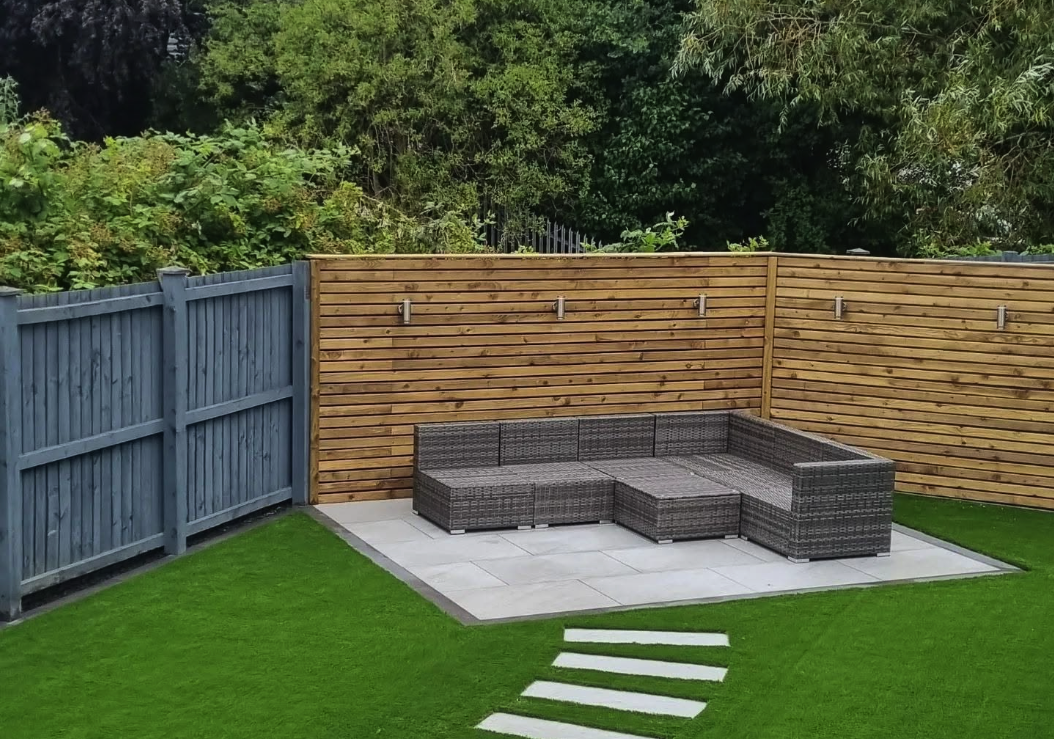
Manchester may be famous for rain, but modern garden design needs to prepare for both extremes. Longer dry spells can leave lawns and planting stressed, while sudden heavy rainfall can expose poor levels, blocked drainage and badly planned patios.
The solution is not to design for one type of weather. It is to create a garden that works through changing conditions and still feels practical for everyday family life.
Get the levels and drainage right first
Before choosing paving colours or fence styles, the site needs to drain properly. Patios should be laid to appropriate falls and surface water should be directed safely away from buildings. Where necessary, drainage channels or other solutions can be incorporated into the hard landscaping.
This is one of the most important differences between a garden that looks good for six months and one that continues performing for years.
Use paving without turning the garden into a heat trap
A large patio is brilliant for entertaining and low-maintenance living, but a garden made almost entirely from hard surfaces can feel hot during summer and may generate more runoff in heavy rain.
Combining paving with lawn, planting, gravel or raised beds creates a more comfortable and balanced outdoor space.
Choose tougher planting
Plants that are suited to the actual garden conditions are more likely to thrive with less intervention. Sunny, free-draining areas can support drought-tolerant grasses and perennials, while wetter or shaded parts of the garden need an entirely different planting approach.
The important point is to stop treating every border in the same way.
Think carefully about lawns
Natural turf remains popular because it creates a soft, usable surface for children, pets and family gardens. During dry spells it can turn brown, but established lawns often recover when wetter weather returns.
For homeowners who want less maintenance, the garden can also combine smaller lawn areas with paving, decking or artificial grass depending on how the space will actually be used.
Add useful shade and shelter
Fencing, pergolas, trees and seating positions can all affect how comfortable a garden feels. A good design considers sun direction, prevailing weather and privacy so that the garden has places to use in different conditions.
Make maintenance realistic
The best low-maintenance garden is not necessarily the one with the least planting. It is the one where every element has a purpose and can be maintained easily. Access to borders, sensible planting densities, durable materials and a clear layout all help.
Manchester Landscaping provides patios and paving, decking, fencing, artificial grass, turf laying and driveways across Manchester and Hyde. Whether you are upgrading one part of the garden or planning a full transformation, building weather resilience into the project from the start can save problems later.
Contact Manchester Landscaping to arrange a free design consultation and discuss your outdoor space.