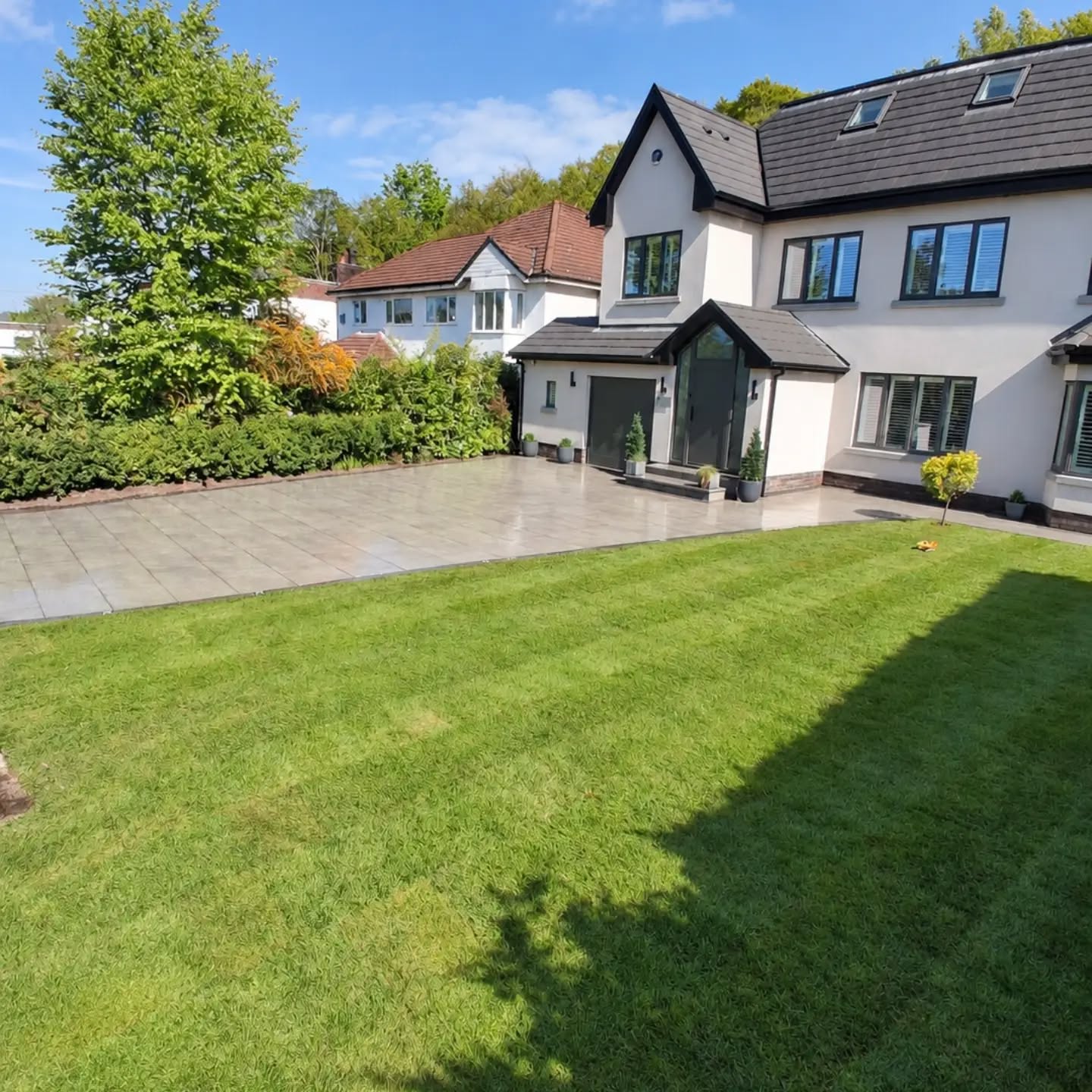
Two things are happening at once this autumn. It is the best time of year to lay a new lawn, and artificial grass has rarely been talked about, for good and bad reasons.
We install both artificial grass and real turf across Hyde, Tameside and Greater Manchester, so we do not have a reason to push you one way. Here is an honest look at artificial grass vs real grass to help you decide what suits your garden.
The case for real turf
A natural lawn is still the classic choice for a family garden, and there is a lot to like about it.
- It is much cheaper to buy. The HomeOwners Alliance puts multipurpose turf from around £2 to £3 per square metre, compared with around £20 per square metre for artificial grass, before installation.
- It is cool and soft underfoot, even on a hot day.
- It lets rain soak in and supports insects, birds and soil life.
- It looks and smells like a real garden.
The downsides are just as real. It needs regular mowing from spring to autumn, feeding and occasional repair. Heavy use, dogs and shade all take their toll, and in a wet Manchester winter a busy lawn can quickly turn to mud, especially where gardens sit on heavy clay.
The case for artificial grass
Artificial grass solves different problems.
- No mowing, and it looks green all year.
- It is usable in winter, without muddy paws or boots coming into the house.
- It copes with heavy use in small family gardens where real grass wears out.
- It works where grass will not grow, such as heavily shaded corners.
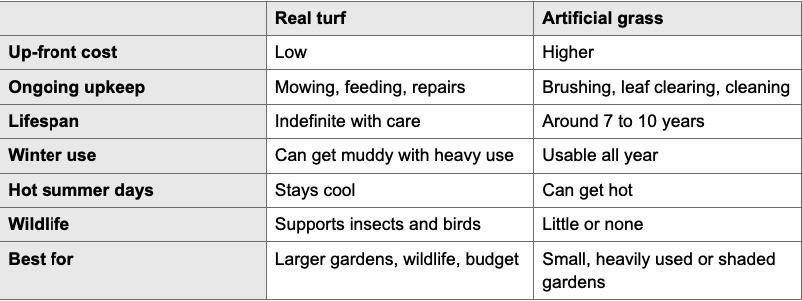
But it has drawbacks worth knowing. It costs more up front, and the HomeOwners Alliance says a well-installed, well-looked-after artificial lawn lasts approximately 7 to 10 years. It can get uncomfortably hot in direct sun. It is made of plastic, offers no habitat for wildlife, and has become a target for criticism: Ideal Home put artificial lawns at the top of its list of garden trends to avoid in 2026. And it is not maintenance-free. It still needs brushing, leaf clearing and occasional cleaning.
Questions to ask before you choose
- How will the garden actually be used: children, dogs, entertaining or mostly for looking at?
- How much sun does the lawn area get?
- How much time do you want to spend on upkeep?
- What is your budget now, and over the next ten years?
- How long are you planning to stay in the house?
Your answers usually settle the artificial grass vs real grass question clearly, or point to a mix of both.
Why autumn is the best time to lay turf
If you are leaning towards a real lawn, now is the time. The RHS says turf is best laid in mid-autumn, and can be laid any time from mid-autumn to early spring when the soil is not too wet or frosty. Cooler temperatures and regular rain help the roots establish without constant watering, so the lawn is ready to use by spring.
Preparation is what makes or breaks a new lawn. The RHS recommends removing perennial weeds, digging or rotovating to around 20 to 25cm to break up compaction, working in organic matter, letting the ground settle and then levelling it before the turf goes down. On compacted or clay soils, this groundwork matters even more.
If you choose artificial grass, do not cut corners on the base
Most of the artificial lawns that look tired after a couple of years have the same problem: what is underneath. A proper installation involves digging out the old lawn, building a compacted, free-draining sub-base, adding a weed membrane and fixing the edges securely. In a climate as wet as ours, drainage through the base is essential, otherwise water sits under the surface and the lawn smells and sags.
Good-quality grass, installed properly, will look far better for far longer than a cheap product laid on sand.
The middle ground
You do not have to choose one or the other for the whole garden. Some of our favourite gardens combine both:
- a real lawn in the open, sunny area, with artificial grass in a shady strip or a heavily used play corner
- a smaller lawn surrounded by a generous patio, which cuts mowing without losing the green
- artificial grass alongside a natural stone patio for a neat, low-maintenance finish, like the Kandla Grey sandstone garden in our projects
Get advice for your garden
The right answer depends on your garden, your household and how you want to use the space. We are happy to give you an honest recommendation, even if that means a simpler job.
Manchester Landscaping has been creating gardens across Hyde, Tameside and Greater Manchester since 2014, from new lawns and artificial grass to patios, decking, fencing and driveways. Get in touch for a free quote and we will help you choose the lawn that suits your garden, and lay it properly.